
Views: 0 Author: Site Editor Publish Time: 2026-07-21 Origin: Site


Procuring an industrial gas plant represents a high-stakes capital investment where operational expenditure—primarily power consumption—will quickly dwarf the initial capital outlay. Relying on generic or poorly defined technical parameters leads to oversized compressors, inadequate turndown capabilities, or failure to meet peak purity demands. These oversights result in wasted energy and severe production bottlenecks that cripple downstream processes. To mitigate procurement risk and ensure vendor alignment, engineering and procurement teams must draft a rigorous, site-specific air separation unit specification. This document serves as the technical foundation for your entire project. It dictates the physical footprint, the utility requirements, and the operational limits of the facility. This guide breaks down the critical decision-stage criteria required to evaluate technologies, define performance guarantees, and structure a watertight Request for Proposal (RFP) that holds vendors accountable to strict performance metrics.
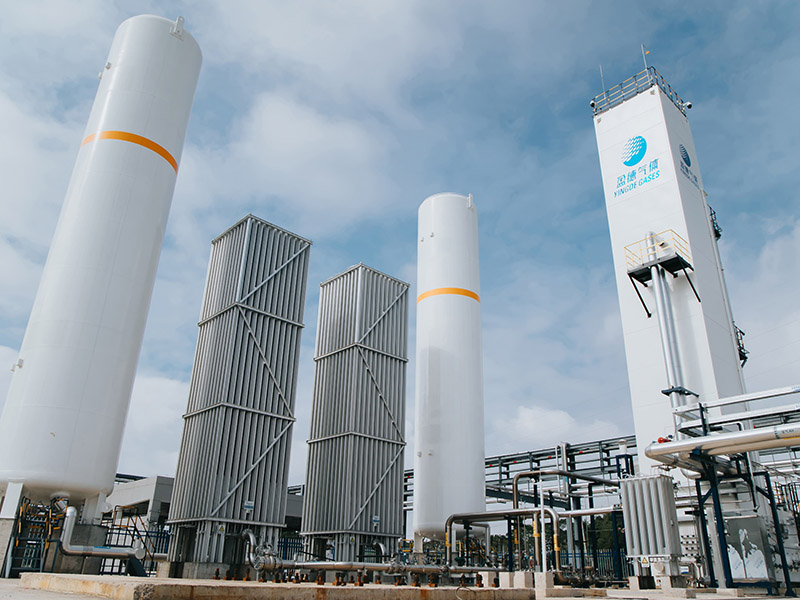
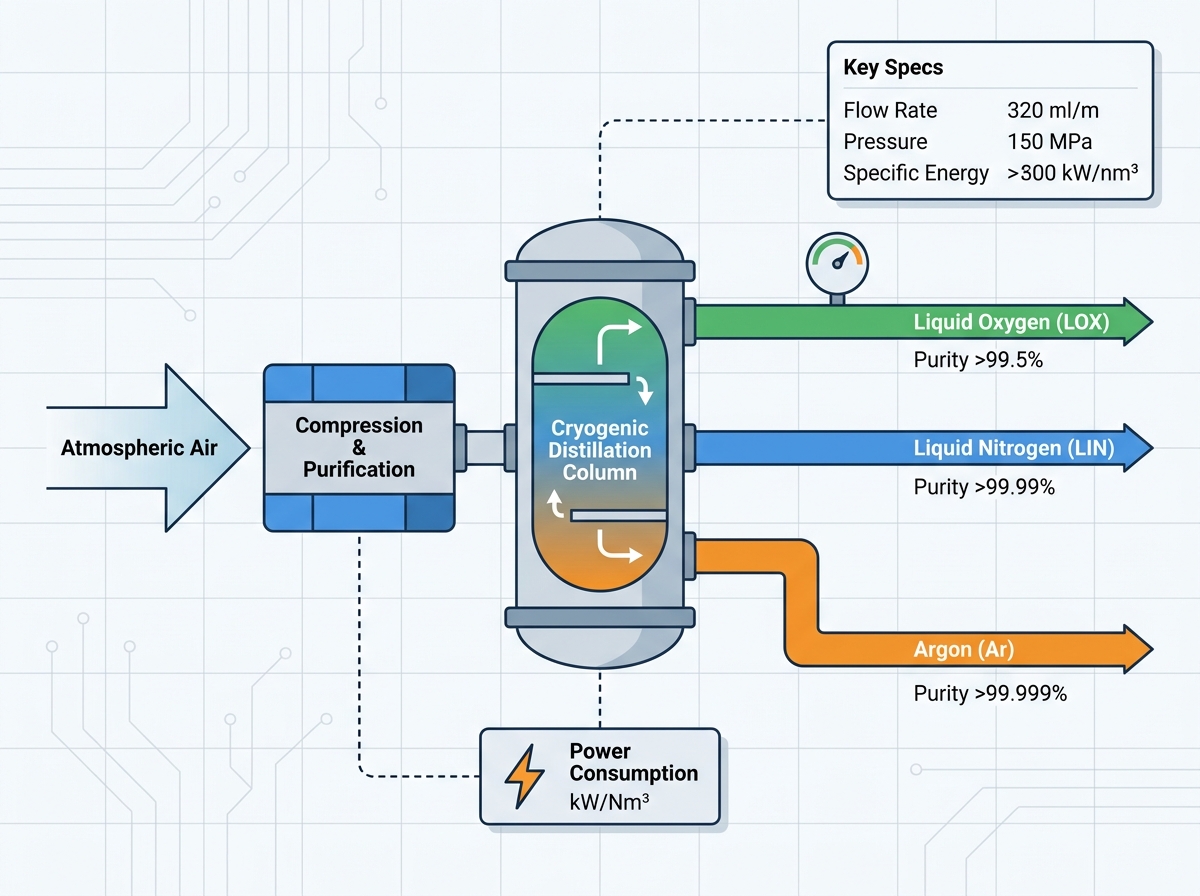
Purity Dictates Technology: The required purity levels (e.g., 99.5% vs. 99.999% O2) and product state (gas vs. liquid) fundamentally determine whether a cryogenic or non-cryogenic (PSA/VSA) system is required.
Energy Efficiency is the Primary OPEX Driver: A precise specification must demand vendor guarantees on Specific Energy Consumption (SEC) measured in kWh/Nm³.
Ambient Conditions Alter Capacity: Specifications must account for local elevation, maximum ambient temperatures, and relative humidity, as these directly impact air compressor sizing and overall plant yield.
Flexibility Requires Planned Turndown: Defining the required turndown ratio ensures the plant can operate efficiently during periods of low demand without risking compressor surge or column instability.
Table of Contents
You must establish baseline, average, and peak demand flow rates accurately before engaging vendors. Standardize measurement units across all documentation to prevent costly engineering errors. Use Nm³/h, Sm³/h, or SCFM consistently to ensure apples-to-apples vendor comparisons. Account for future facility expansion during this phase, as sizing the plant for current needs alone often leads to premature obsolescence. When defining these rates, follow a structured approach to capture all operational scenarios.
Audit historical consumption data from existing flow meters to establish a true baseline demand.
Calculate peak flow requirements by analyzing the maximum simultaneous draw from all downstream processes.
Determine the frequency and duration of peak demand spikes to size buffer vessels appropriately.
Project future capacity needs based on planned facility expansions over the next five to ten years.
Define the minimum stable flow rate required during plant maintenance or low-production shifts.
Specify exact purity percentages for your primary products, including oxygen, nitrogen, and argon. Define the maximum allowable concentrations of specific impurities. Measure moisture, carbon dioxide, hydrocarbons, argon in oxygen, and nitrogen in argon in parts per million (ppm) or parts per billion (ppb). Strict impurity limits protect downstream processes from contamination and prevent hazardous conditions within the cold box.
Product Stream | Target Purity | Maximum Moisture | Maximum CO2 | Other Impurity Limits |
|---|---|---|---|---|
Industrial Oxygen | 99.5% | < 2 ppm | < 1 ppm | Argon < 0.5% |
High-Purity Nitrogen | 99.999% | < 1 ppm | < 1 ppm | Oxygen < 5 ppm |
Liquid Argon | 99.999% | < 1 ppm | < 1 ppm | Oxygen < 2 ppm, Nitrogen < 10 ppm |
Identify the required pressure at the battery limit for seamless pipeline integration. Evaluate the operational trade-offs between internal compression and external product gas compressors. Internal compression involves liquid pumping before vaporization within the main heat exchanger. This method often provides better reliability and eliminates the need for a separate oxygen compressor, but it requires specific high-pressure heat exchanger designs and increases the load on the main air compressor.
Specify limits for local atmospheric contaminants at your installation site. Measure dust particulate size, sulfur oxides (SOx), nitrogen oxides (NOx), acetylene, and total hydrocarbons. Establish strict pre-treatment parameters based on these measurements. Proper filtration and adsorption prevent hazardous hydrocarbon accumulation in the liquid oxygen pool, which poses a severe explosion risk. If your site is near a petrochemical facility, you must mandate specialized hydrocarbon monitoring and advanced pre-purification layers.
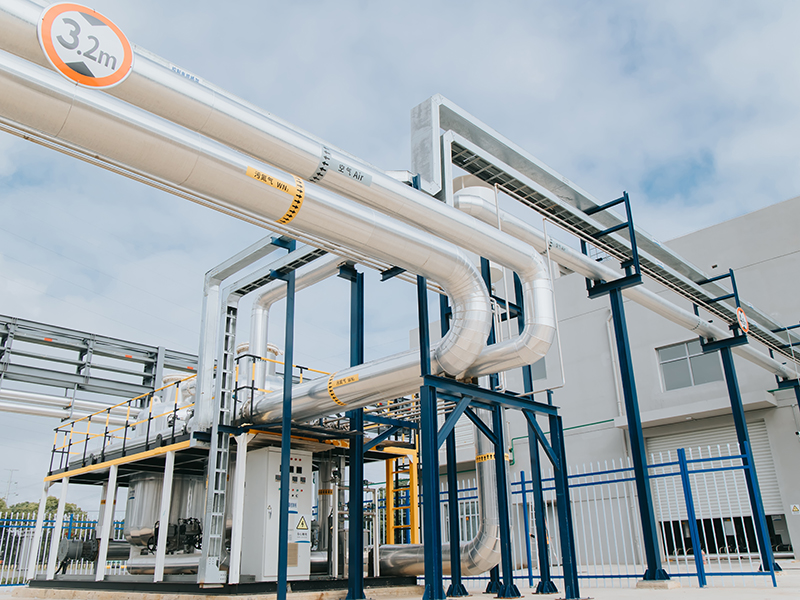
Cryogenic distillation suits high-volume demand and ultra-high purity requirements. Choose this technology when you need simultaneous liquid and gas production to feed both pipelines and backup storage tanks. Implementation realities include longer startup times, larger physical footprints, and extensive civil foundation work. However, cryogenic plants offer superior economies of scale for massive industrial operations, providing the lowest specific energy consumption for large-scale oxygen and nitrogen generation.
Specify adsorption or membrane systems for lower volume requirements. These work best for lower purity thresholds, such as 90-93% oxygen or 95-99% nitrogen. They provide rapid startup capabilities, often reaching required purity within minutes. Implementation realities feature modular footprints that require minimal civil work, but they limit you to single-product generation. You cannot produce nitrogen and oxygen simultaneously with these systems, and they cannot generate liquid products for backup storage.
Evaluate the commercial feasibility of specifying noble gas recovery subsystems. You can integrate argon, neon, krypton, or xenon recovery within a standard air separation unit specification. Argon recovery requires an additional distillation column and complex process control to separate the argon from oxygen. Assess your local market demand and the specific argon concentration in your feed air before mandating these complex additions, as they significantly increase the initial capital outlay and control system complexity.
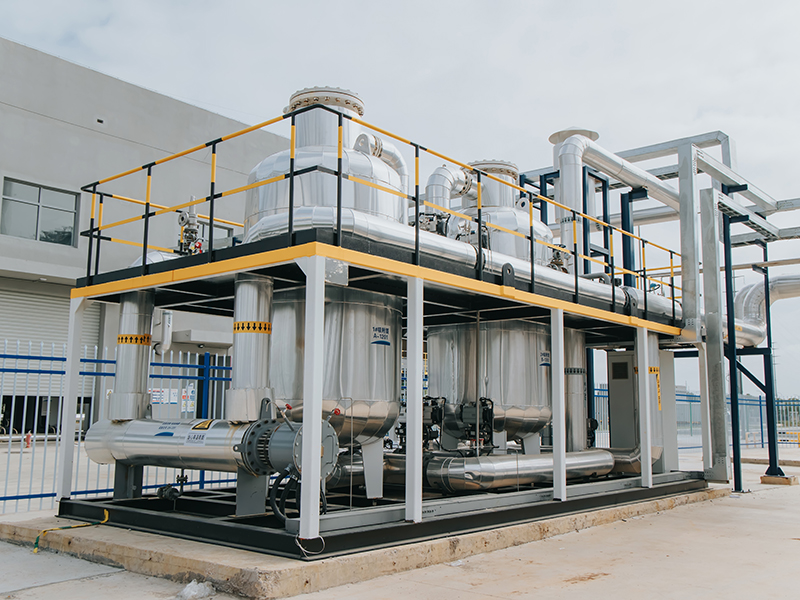
Specify exact compressor types, choosing between centrifugal and screw designs based on your flow requirements. Define the required control mechanisms, such as inlet guide vanes or variable speed drives, to manage turndown efficiently. Outline design margins, casing materials, and intercooling targets. The MAC consumes the vast majority of the plant's power, making its specification critical for overall efficiency. Require vendors to provide detailed compressor performance maps showing surge lines and efficiency curves at various ambient temperatures.
Compare thermal swing adsorption (TSA) against pressure swing adsorption (PSA) for moisture and carbon dioxide removal. Specify the exact adsorbent materials required for your specific ambient conditions. Choose between molecular sieve and activated alumina based on your ambient humidity and hydrocarbon load. Define regeneration cycle times to optimize thermal efficiency. Mandate dual-bed configurations to ensure continuous operation while one bed undergoes high-temperature regeneration.
Specify material selections strictly for cryogenic service. Require aluminum alloys (such as 5083) or Type 304/304L stainless steel to prevent low-temperature embrittlement and catastrophic failure. Define the technical requirements for Plate-Fin Heat Exchangers (PFHE), including maximum allowable working pressures and thermal stress limits. Mandate structured column packing instead of traditional sieve trays to reduce pressure drop across the distillation columns, which directly lowers the discharge pressure required from the main air compressor.
Require vendors to provide guaranteed SEC metrics at 100%, 75%, and 50% load capacities. Establish strict penalty clauses in the specification. Vendors must face commercial consequences for failing to meet SEC guarantees during performance testing. Energy efficiency dictates the long-term viability of the plant. A system that requires an extra 0.1 kWh per normal cubic meter will generate massive utility bills over a twenty-year operational lifespan.
Define the minimum stable operating capacity for the plant. Cryogenic plants typically require a 50-70% turndown ratio to maintain column stability and prevent compressor surge. Evaluate the time required to ramp up from minimum turndown to full capacity. Fast ramp-up times allow you to respond quickly to sudden production spikes in your downstream processes. Specify the exact control sequences required to manage liquid inventory during low-demand periods.
Specify all available site utilities in detail. Document cooling water temperature, chemistry, pressure, and flow rate. List electrical grid voltage, frequency, and harmonic limits. Assess the impact of cooling system choices on total water consumption and parasitic power loads. Choose between evaporative cooling towers, dry coolers, or closed-loop chillers based on local water availability and ambient wet-bulb temperatures.
Cooling System Type | Water Consumption | Power Consumption | Maintenance Requirement |
|---|---|---|---|
Evaporative Cooling Tower | High | Low | High (Chemical treatment, cleaning) |
Dry Coolers (Fin-Fan) | Zero | High | Low (Occasional fin cleaning) |
Closed-Loop Chillers | Low | Very High | Medium (Compressor maintenance) |
Detail the site's maximum and minimum ambient temperatures. Include design wet-bulb and dry-bulb temperatures, relative humidity, and barometric pressure. High temperatures and high humidity degrade Main Air Compressor efficiency by reducing air density and increasing the mass of water vapor that must be compressed. These conditions require larger pre-purification units to handle the increased moisture load and larger intercoolers to manage the heat of compression.
Define plot plan limitations and the maximum allowable height for the cold box. Document the load-bearing soil capacities for heavy equipment foundations, particularly for the MAC and the cold box structure. Specify your preference for modular construction versus stick-built assembly. Base this decision on site accessibility, shipping limitations, and local labor availability. Modular skids reduce on-site construction time but require clear transportation routes for oversized loads.
Set maximum decibel (dB) limits at the plant boundary. A common standard is 85 dB at 1 meter from the equipment. Specify silencer requirements for all vent valves, blow-off lines, and compressor intake hoods. Strict noise control protects site personnel and satisfies local environmental regulations. Address any potential emissions from the PPU regeneration cycle, ensuring that purged gases do not violate local air quality standards.
Mandate adherence to regional and international engineering standards. Require compliance with the ASME Boiler and Pressure Vessel Code Section VIII for all pressure-retaining components. Enforce EIGA/CGA guidelines for oxygen safety, specifically regarding material compatibility and cleaning procedures. Specify API standards for rotating equipment, including API 617 for centrifugal compressors and API 614 for lubrication systems, to ensure industrial-grade reliability.
Specify liquid storage tanks for oxygen, nitrogen, and argon. Include ambient vaporizers to maintain supply during scheduled maintenance or unplanned outages. Determine the required days of backup inventory. Base this calculation on your supply chain risk, local logistics capabilities, and the financial impact of a total plant shutdown. Ensure the vaporization system is sized to handle the absolute peak flow rate of your facility.
Outline requirements for the Distributed Control System (DCS) or Programmable Logic Controller (PLC). Specify remote monitoring capabilities and functional safety systems. Require specific Safety Integrity Level (SIL) ratings for critical loops, such as compressor surge control and liquid oxygen hydrocarbon monitoring. Mandate predictive maintenance sensors on all rotating equipment and seamless integration protocols (like Modbus TCP or OPC UA) with your existing plant networks.
Define the exact parameters of the Factory Acceptance Test (FAT) and Site Acceptance Test (SAT). Align these tests with international test codes like ASME PTC 48 for Gas Separation Plants. Establish commercial protections regarding delivery timelines and mechanical completion dates. Include strict liquidated damages for purity shortfalls, capacity deficits, and power consumption overages. Vendors must prove their equipment meets the exact specifications under real-world site conditions before final handover.
Choosing the right air separation unit specification is not only about meeting today’s production requirements—it is also about ensuring long-term efficiency, reliability, and lower operating costs. A well-defined specification helps vendors deliver solutions that match your technical and business goals while reducing procurement risks.
At Zhejiang Jinhua, we specialize in industrial gas equipment and customized air separation solutions for customers worldwide. With extensive engineering experience and a focus on energy-efficient technologies, we help businesses design reliable ASU systems that deliver stable performance, lower operating costs, and long-term value.
Before selecting an ASU supplier, compare not only the initial investment but also long-term energy efficiency, operational flexibility, and technical support to maximize your return on investment.
A: Standard cryogenic ASUs typically offer a turndown ratio of 60% to 70% of nominal capacity. They achieve this without significant loss of efficiency or column instability. Advanced designs and specific control strategies can push this limit slightly lower depending on the plant configuration.
A: Higher temperatures and lower atmospheric pressure at elevation reduce air density. This requires larger, more power-intensive compressors to achieve the necessary mass flow of air. High humidity also forces the pre-purification unit to work harder to remove moisture.
A: Normal cubic meters (Nm³) and Standard cubic meters (Sm³) use different baseline temperatures and pressures for measurement. Failing to specify which standard is used can result in a capacity mismatch of up to 7%, leading to undersized equipment.
A: Increasing oxygen purity from 95% to 99.5%+ requires additional distillation stages and higher reflux ratios. This exponentially increases the energy required per cubic meter of product, driving up operational expenses significantly.
A: Critical standards include CGA G-4.1 for cleaning equipment for oxygen service. You must also include EIGA/CGA guidelines for the safe design, material selection, and operation of cryogenic enclosures and piping systems.
A: It typically takes 12 to 24 months from the finalization of the specification and contract award to full commissioning. The exact timeline depends heavily on plant scale, modularity, and global supply chain conditions.


