
Views: 0 Author: Site Editor Publish Time: 2026-07-21 Origin: Site


Industrial gas procurement presents a high-stakes reality. An improperly sized air separation unit creates permanent operational bottlenecks or bleeds capital through wasted energy and underutilization. Facilities constantly face the tension between current gas consumption, projected facility growth, and the rigid capital and operational realities of on-site gas generation. Balancing peak demand spikes with efficient baseline operations requires precise engineering. You cannot simply guess your future needs and buy the biggest plant available. That approach guarantees massive electrical waste.
This article provides a technical evaluation framework for process engineers and plant managers. We will help you determine the exact capacity requirements, technology type, and operational parameters for your next gas generation facility. We base this on actual field data, thermodynamic realities, and mechanical constraints. You will learn how to size your system for maximum efficiency and operational reliability without falling into common over-engineering traps.

Capacity dictates technology: Cryogenic distillation is mandatory for high-volume/high-purity needs, while PSA or membrane systems suit mid-to-low capacity requirements.
Turndown ratio is critical: Sizing for future peak demand requires an ASU with a flexible turndown ratio to avoid severe energy penalties during current average-demand periods.
Lifecycle cost hinges on power: OpEx (electricity) will rapidly eclipse initial CapEx; sizing must optimize for "specific power" (kW per ton of gas produced).
Ambient conditions govern capacity: Local temperature, altitude, and relative humidity dictate air density, directly impacting the mass flow rate and capacity of the Main Air Compressor (MAC).
Redundancy vs. Capacity: Oversizing an ASU is not a substitute for a properly engineered liquid backup system during maintenance outages or unexpected demand spikes.
Table of Contents
Plant construction exhibits a non-linear relationship between capacity and capital expenditure. Economies of scale dictate that doubling plant capacity does not double the initial equipment cost. Larger distillation columns and compressors offer better capital efficiency per ton of design capacity. However, operational expenditures dominate the lifecycle cost. Electrical power for the main air compressor and booster compressors represents the largest ongoing expense. Optimizing the design requires balancing the upfront equipment investment against long-term electrical efficiency. Engineers must evaluate the specific power consumption at expected operating loads. A cheaper plant upfront often consumes significantly more power over a twenty-year lifespan.
Consider the motor sizing for the main air compressor. A 150-ton-per-day plant might require a 4160V motor drawing massive amperage. If you size the plant for 200 tons per day but only operate at 120 tons, that oversized motor runs far below its peak efficiency curve. The power factor drops. You pay a penalty to the utility company for poor power factor, and you pay for the wasted kinetic energy. We always recommend plotting the compressor efficiency curves against your actual expected daily load, not just the theoretical maximum.
An undersized plant forces reliance on merchant liquid bulk deliveries. Supplementing baseload production with delivered liquid nitrogen or oxygen introduces severe logistical vulnerabilities. Facilities face production risks during peak manufacturing cycles. Process throttling becomes necessary when gas shortages occur. Downtime directly impacts overall facility output. Relying on external supply chains negates the primary reliability benefit of on-site generation. Undersizing also limits future expansion capabilities. Plants must often install secondary, smaller units later, which ruins site footprint efficiency and increases maintenance overhead.
I have seen facilities try to run a 50-ton plant at 105% capacity by pushing the compressors past their continuous duty ratings. This accelerates wear on the thrust bearings and increases the discharge temperatures. High discharge temperatures overload the intercoolers and the front-end purification unit. Eventually, the molecular sieves degrade faster, leading to moisture breakthrough and a catastrophic freeze-up in the main heat exchanger. Undersizing is a mechanical risk as much as a financial one.
Running a cryogenic air separation unit below its nameplate capacity alters its thermodynamic physics. Compressors lose efficiency rapidly when throttled back. Specific power consumption increases dramatically at low loads. Process instability becomes a major risk. Column weeping occurs when vapor velocity drops too low to support the liquid on the distillation trays. Liquid falls through the tray perforations, destroying separation efficiency. Purity levels fluctuate. Operators must often vent excess product to keep the plant stable. This wastes the electrical energy used to compress and separate the feed air.
When you oversize, you also oversize the cooling water system, the instrument air system, and the electrical switchgear. A plant designed for 300 tons per day running at 150 tons per day will struggle to maintain the correct liquid levels in the reboiler. The expansion turbine might not generate enough refrigeration because the mass flow is too low. You end up importing liquid nitrogen just to keep the cold box cold, which completely defeats the purpose of having an on-site plant.
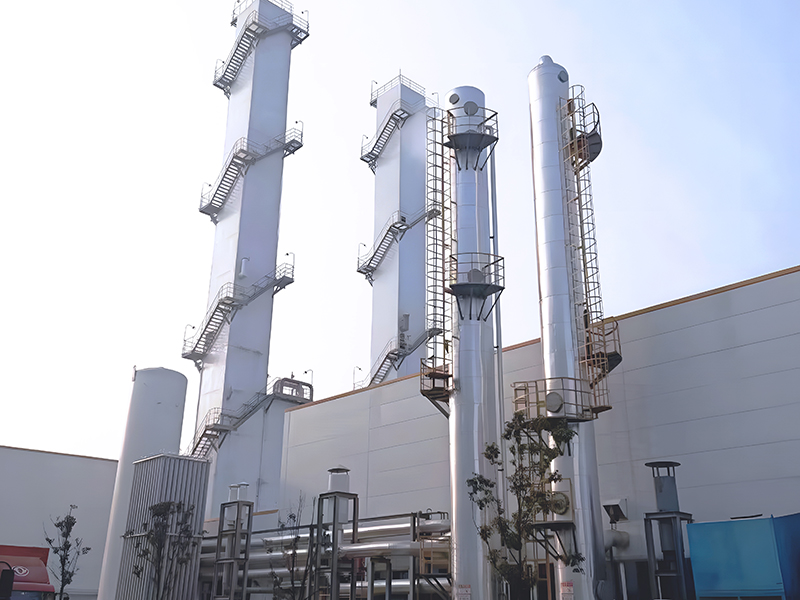
Engineers must conduct a rigorous historical and projected gas consumption audit. You cannot size a plant based on a single average number. Differentiate between steady-state base load, cyclical peaks, and transient spikes. Base load represents the continuous, 24/7 demand of the facility. Cyclical peaks occur during specific batch processes or shift changes. Transient spikes are short-duration, high-volume draws. Plotting this data creates a load profile curve. The plant should ideally run near its optimal design point for the base load. Liquid storage systems handle the transient spikes.
To build an accurate profile, install mass flow meters on your main distribution headers. Record data at one-minute intervals for at least a month. Look at the standard deviation of your flow rates. If your base load is 100,000 standard cubic feet per hour (scfh) but you have five-minute spikes of 300,000 scfh, sizing the main plant for 300,000 scfh is a massive mistake. Size the plant for 110,000 scfh and install a high-pressure receiver tank or a liquid vaporizer system to buffer the 300,000 scfh spikes.
Local geography fundamentally alters plant performance. Altitude, dry-bulb temperatures, wet-bulb temperatures, and relative humidity dictate air density. The Main Air Compressor (MAC) operates on actual volumetric flow. When air density drops, the mass flow rate decreases. Less mass flow means less product output. You must size the plant for worst-case summer conditions. High ambient temperatures and high humidity represent the lowest air density. Failing to account for summer conditions guarantees capacity shortfalls during the hottest months. Winter operations will yield higher capacity, requiring proper turndown controls.
A plant installed in Houston, Texas, will perform vastly differently than the exact same plant installed in Denver, Colorado. In Denver, the high altitude means the air is thin year-round. The compressor must be physically larger to move the same mass of air. In Houston, the extreme summer humidity means a significant portion of the incoming air mass is just water vapor, which gets knocked out in the pre-cooling tower and the molecular sieves. You lose effective capacity. Always specify the exact site elevation and the 99th percentile summer wet-bulb temperature when requesting vendor bids.
Required purity levels directly impact physical equipment size. Producing 99.5% oxygen requires a different column design than 99.999% ultra-high purity oxygen. Higher purities demand more theoretical separation stages. This increases the height of the distillation columns. It also increases the required reflux ratios. Higher reflux ratios reduce the overall volume output for a given compressor size. You face a strict trade-off between volume output and ultra-high purity. Do not specify higher purity than your process actually requires. Unnecessary purity demands inflate equipment size and power consumption.
For example, standard industrial cutting or wastewater treatment usually only requires 93% to 95% oxygen. You can achieve this easily with a VPSA system. If you demand 99.9% oxygen for the same application, you force the design into a cryogenic system, doubling your capital cost and increasing your specific power. Nitrogen purity works the same way. Blanketing a chemical tank might only need 99% nitrogen, while semiconductor manufacturing requires parts-per-billion impurity levels. Match the purity spec strictly to the process requirement.
Many facilities require simultaneous gas and liquid production. Sizing must account for this co-production requirement. Producing liquid product demands massive refrigeration capacity. The plant must include expansion turbines to generate this cold energy. Liquid production pulls refrigeration away from the gaseous separation process. You must define the exact ratio of gaseous product to liquid product. The liquid serves as on-site backup storage. If you require high liquid production rates to fill backup tanks quickly, the main air compressor and expanders must be sized significantly larger.
A standard gas-only plant might produce 1% to 2% of its capacity as liquid just to maintain tank levels against natural boil-off. If you want to produce 10% of your capacity as liquid to sell locally or to build up a massive strategic reserve, you need a liquefier cycle. This often means adding a booster air compressor to drive a high-pressure expansion turbine. The specific power of liquid production is roughly three to four times higher than gaseous production. Define your liquid needs carefully.
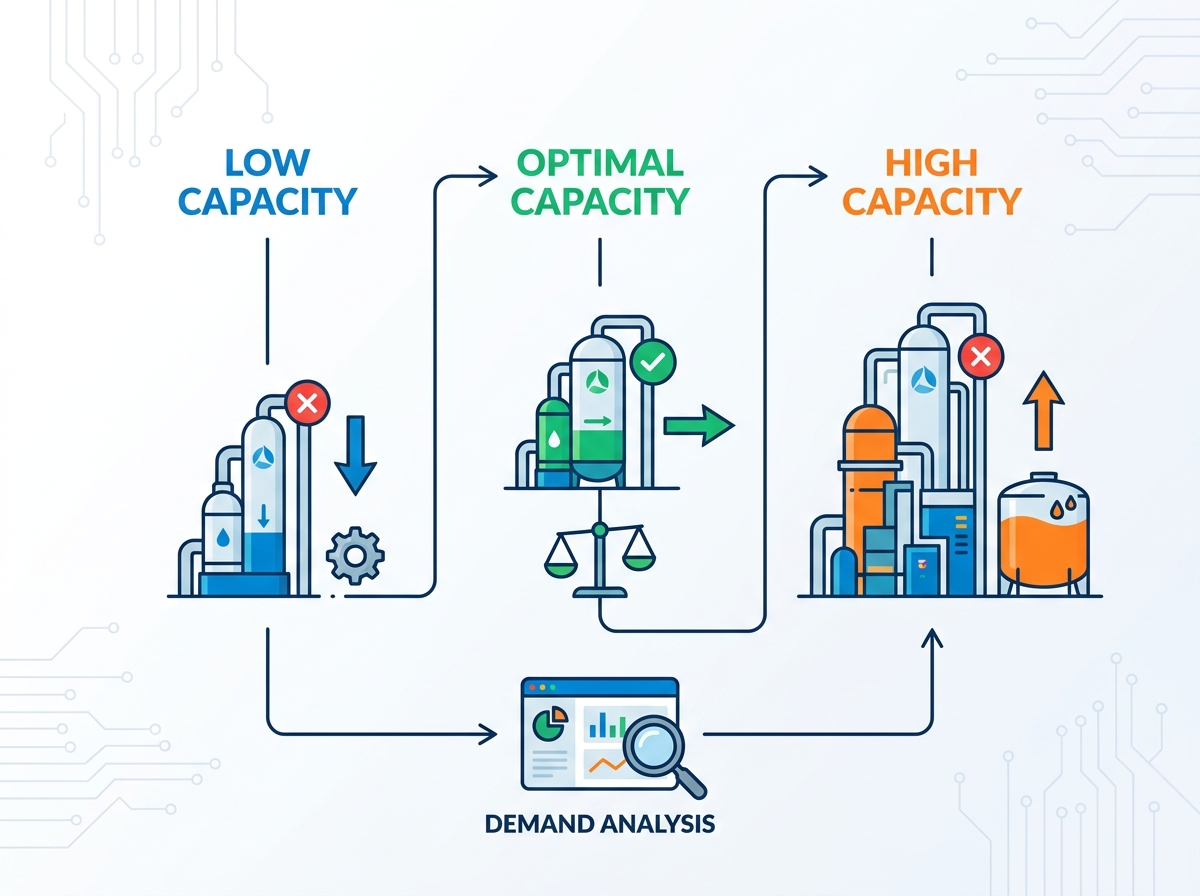
Cryogenic distillation becomes the only viable technical choice at high capacities. Facilities requiring over 100 tons per day rely exclusively on this technology. It handles multi-gas production seamlessly. You can extract oxygen, nitrogen, and argon simultaneously. Thermodynamic integration maximizes efficiency at these scales. Argon recovery requires specific economic thresholds. Argon columns need high stage counts due to similar boiling points with oxygen. Argon recovery generally becomes viable only at capacities exceeding 150 tons per day. Cryogenic plants offer the highest purity and the best specific power at large scales.
The cold box houses the main heat exchangers and distillation columns packed with structured aluminum packing. Operating at -300 degrees Fahrenheit requires strict moisture and carbon dioxide removal upfront. Cryogenic plants are highly reliable, often running for three to five years between major turnarounds. However, they are not nimble. Starting a cryogenic plant from a warm condition takes 24 to 72 hours. You cannot turn them on and off like a light switch. They are designed for continuous, steady-state operation.
Pressure Swing Adsorption (PSA) and Vacuum Pressure Swing Adsorption (VPSA) serve mid-tier capacity needs. These technologies excel when ultra-high purity or liquid product is not required. PSA systems use molecular sieves to separate gases at ambient temperatures. They offer rapid start-up times compared to cryogenic plants. Modular scalability allows easy capacity expansion. VPSA systems optimize power consumption for mid-scale oxygen production. They avoid the massive capital investment of a cold box. However, they cannot produce liquid for backup storage. Purity limits usually cap around 93-95% for oxygen.
A VPSA plant uses a blower to push air through a vessel filled with zeolite, which adsorbs nitrogen and lets oxygen pass. A vacuum pump then pulls the nitrogen off the zeolite to regenerate it. This cycle alternates between two or more vessels. VPSA is incredibly power-efficient for mid-range oxygen needs (20 to 100 tons per day). Maintenance is straightforward, mostly involving blower and vacuum pump servicing. The zeolite beds can last 10 to 15 years if the inlet air is kept clean and dry.
Membrane technology dominates low-capacity, lower-purity applications. Facilities use membranes primarily for nitrogen blanketing gas. The technology relies on selective permeation through hollow fibers. It requires a very small footprint. Maintenance advantages are significant at smaller scales. There are no moving parts besides the feed air compressor. Membranes operate reliably in remote locations. However, capacity is strictly limited. Scaling up membrane systems requires adding parallel modules, which quickly loses economic viability against PSA or cryogenic options at higher volumes.
Membranes work by forcing compressed air down a bundle of microscopic polymer tubes. Oxygen and water vapor permeate through the tube walls faster than nitrogen. The nitrogen travels down the center of the tube and exits as the product. The purity is highly dependent on the flow rate and the feed pressure. If you need more flow, the purity drops. Membranes are perfect for offshore oil rigs or small chemical plants where space is tight and 95% to 99% nitrogen is acceptable.
Technology Comparison by Capacity and Purity | ||||
Technology Type | Typical Capacity Range | Max Purity (O2 / N2) | Liquid Production | Start-up Time |
|---|---|---|---|---|
Cryogenic Distillation | > 100 Tons/Day | 99.999% / 99.999% | Yes | 24 to 72 Hours |
PSA / VPSA | 10 to 150 Tons/Day | 95% / 99.99% | No | 10 to 30 Minutes |
Membrane Separation | < 10 Tons/Day | N/A / 99.5% | No | Under 5 Minutes |
Turndown ratio defines the ability to operate below design capacity. A flexible air separation unit might operate stably at 60% or 70% of its nameplate rating. Different compressor types impact this capability. Centrifugal compressors use inlet guide vanes to manage flow reduction. Reciprocating compressors offer different turndown mechanics. Column design also limits flexibility. Structured packing handles lower vapor loads better than traditional sieve trays. You must evaluate the turndown limits to ensure the plant can match your facility's low-demand periods without venting product or shutting down completely.
When evaluating centrifugal compressors, look closely at the surge line on the compressor map. If the plant needs to turn down to 50%, but the compressor surges at 65%, you will have to bypass air back to the suction. Bypassing air consumes full power while delivering less product, destroying your specific power metrics. Advanced plants use variable frequency drives (VFDs) on the main air compressor to improve turndown efficiency, though this adds capital cost and electrical complexity.
Specific power consumption dictates long-term viability. You must evaluate vendor proposals based on guaranteed specific power. This is measured in kilowatt-hours per normal cubic meter or per ton of product. The mathematical framework requires analyzing compressor efficiency. Contrast isothermal efficiency against polytropic efficiency. Isothermal represents the theoretical ideal. Polytropic efficiency reflects real-world thermodynamic performance. Intercooling between compressor stages drives performance closer to the isothermal ideal. Lower specific power means lower electrical bills. Demand strict performance guarantees from manufacturers during the bidding phase.
Make sure vendors are quoting specific power at your actual site conditions, not at standard ISO conditions. A vendor might quote 250 kWh/ton at 60 degrees Fahrenheit and sea level. At your site in Nevada at 95 degrees and 4,000 feet elevation, that same plant might consume 290 kWh/ton. Force all bidders to fill out a standardized performance data sheet based on your exact summer and winter ambient conditions. Include penalties in the contract if the plant fails to meet the guaranteed specific power during the performance test.
The Front-End Purification (FEP) unit protects the cold box. It uses molecular sieve adsorption beds to remove water vapor, carbon dioxide, and heavy hydrocarbons. These impurities will freeze solid at cryogenic temperatures, blocking heat exchangers. FEP sizing must match the maximum air flow of the MAC. Regenerative thermal swing adsorption (TSA) cycles require heat to strip impurities from the beds. Pressure swing adsorption (PSA) cycles use pressure changes. The FEP must scale perfectly with plant design capacity. Undersized beds will allow carbon dioxide breakthrough, forcing an immediate plant shutdown.
Pay attention to the regeneration heater sizing in a TSA system. If the heater is undersized, the regeneration cycle takes too long, and the active bed will saturate before the standby bed is ready. Also, evaluate the type of alumina and molecular sieve used. High-capacity sieves cost more upfront but allow for smaller vessels and lower pressure drop, which saves compressor power. The FEP is the shield for your cold box; never cut corners on its design.
Capacity dictates spatial requirements. You must allocate plot space for the cold box, compressor skids, cooling water towers, and liquid storage tanks. Larger capacities demand massive structural foundations. Evaluate the electrical infrastructure upgrades required. Large-capacity motor loads require high-voltage substations and dedicated switchgear. Compare utility trade-offs for cooling systems. Water-cooled systems offer better compressor efficiency but require cooling towers and makeup water. Air-cooled systems eliminate water usage but increase specific power consumption due to higher interstage temperatures. Site integration requires mapping these utility demands against existing infrastructure.
Verify soil bearing capacity before finalizing the cold box location.
Map out the routing for large-bore cooling water piping to minimize pressure drop.
Ensure adequate clearance for cranes during the initial erection and future maintenance.
Check the utility grid's ability to handle the massive inrush current when starting the main air compressor.
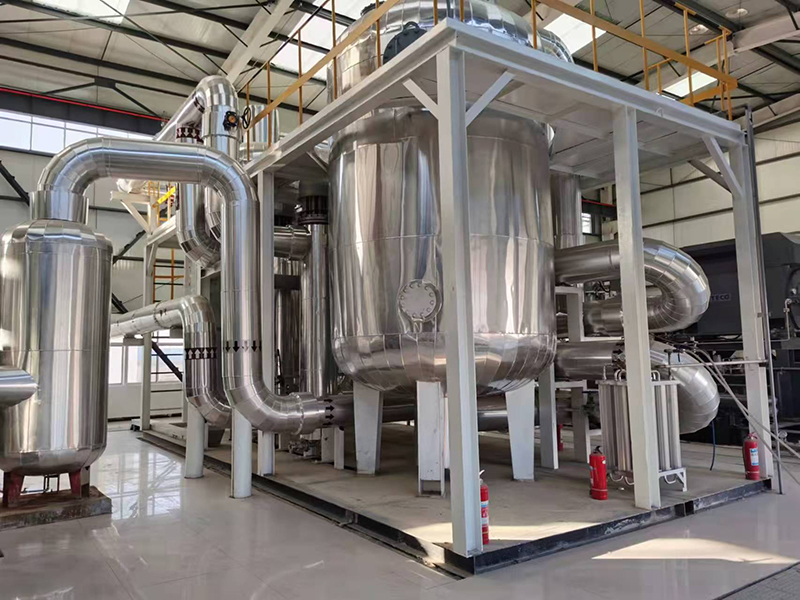
Over-forecasting future plant growth traps capital. Installing a massive plant for demand that never materializes destroys project economics. You must mitigate this risk through smart site planning. Install a right-sized plant for a realistic five-year horizon. Reserve plot space adjacent to the installation. Install blind-flanged piping tie-ins on your main headers. Size the electrical substation with spare breaker capacity. When demand actually materializes, you can install a parallel, modular unit. This phased approach matches capital deployment with actual production needs.
Running two 150-ton plants is often more reliable than running one 300-ton plant. If one unit trips offline, you still have 50% capacity available. This parallel train approach provides inherent redundancy. It also allows you to shut down one unit completely during low-demand seasons, keeping the online unit running at its peak efficiency point. Plan the piping headers and control system architecture from day one to accommodate a second train.
Physical plant size dictates the construction method. Small to mid-sized plants utilize shop-fabricated, modularized skids. These arrive pre-piped and pre-wired. Large capacity plants require field-erected columns. Transport logistics present massive hurdles. Shipping oversized cryogenic columns and cold boxes requires specialized heavy-haul transport. You must evaluate route surveys for height and weight clearances. Remote sites often face bridge weight limits or narrow road constraints. Modular construction minimizes field labor but increases shipping complexity. Field erection solves shipping limits but introduces weather and labor risks during construction.
I once managed a project where the cold box was delayed by three weeks because it could not clear a highway overpass. We had to reroute the transport 400 miles. Always hire a specialized logistics firm to conduct a physical route survey before finalizing the cold box dimensions. Sometimes, splitting the cold box into two sections and welding them in the field is cheaper than paying for extreme heavy-haul permits and police escorts.
Custom-sized cryogenic plants require extensive engineering. The engineering, procurement, and construction (EPC) timeline often spans 18 to 24 months. Compressors and expansion turbines represent long-lead items. Specialized cryogenic valves and aluminum plate-fin heat exchangers require global sourcing. You must factor these lead times into your facility expansion plans. Rushing the engineering phase leads to poor integration and missed capacity targets. Establish firm delivery milestones with your chosen vendor. Monitor their supply chain for critical path components like the main air compressor rotor.
Do not wait until your existing gas supply contract expires to start looking at on-site generation. Start the feasibility study at least three years in advance. The major compressor manufacturers are often booked out a year in advance just for the castings. If you need the plant running by Q4 of 2026, you need to issue the purchase order by Q1 of 2025 at the latest.
Sizing a plant to 150% capacity purely for redundancy wastes capital. It forces the plant to run at poor turndown efficiencies during normal operations. Instead, pair a precisely sized plant with an optimized liquid storage system. Install vacuum-jacketed liquid tanks and ambient air vaporizers. This backup system handles maintenance outages and transient peak spikes. The plant produces a small continuous stream of liquid to keep the tanks full. When demand spikes, the vaporizers automatically deploy gas into the header. This separates base-load efficiency from peak-load reliability.
Size your liquid tanks to hold at least three days of average production. This gives you enough buffer to survive a weekend plant trip or a minor mechanical failure without impacting the downstream manufacturing process. Ensure the vaporizers are sized for the absolute maximum peak flow, not the average flow. If the vaporizers freeze up during a high-demand spike, the liquid backup system is useless.
Selecting the right air separation unit capacity is the key to balancing production efficiency, energy consumption, and long-term operating costs. A properly sized ASU ensures reliable gas supply while providing the flexibility to support future business growth.
At Zhejiang Jinhua, we specialize in industrial gas equipment and customized air separation solutions for customers across a wide range of industries. With extensive engineering expertise and energy-efficient technologies, we help businesses build reliable ASU systems that maximize performance, reduce operating costs, and deliver long-term value.
Before investing in an air separation unit, evaluate not only the required production capacity but also energy efficiency, lifecycle costs, future expansion plans, and supplier technical support to achieve the best long-term return on investment.
A: Cryogenic plants typically start around 100 tons per day and can scale up to several thousand tons per day. They are the only viable technology for massive industrial demands, such as steel mills or large chemical processing facilities, requiring simultaneous high-volume and ultra-high purity gas production.
A: Higher temperatures, higher humidity, and higher altitudes decrease air density. Because the main air compressor operates on a fixed actual volumetric flow, lower air density reduces the mass flow of air entering the plant. This directly reduces the maximum production capacity during hot, humid summer months.
A: Operating a plant below its design capacity reduces compressor efficiency. The specific power consumption increases. If turned down too far, the distillation columns lose stability, causing weeping and purity loss, which severely impacts overall plant efficiency.
A: Size the main plant slightly above your continuous average base-load demand to maximize compressor efficiency. Handle transient peak demands using a properly sized liquid storage and vaporization backup system rather than oversizing the main compressors.
A: PSA systems generally operate between 10 and 150 tons per day, maxing out around 95% oxygen purity. Cryogenic systems scale from 100 to thousands of tons per day, easily achieving 99.999% purity for both oxygen and nitrogen, while also allowing liquid production.
A: Specific power varies by technology, purity, and ambient conditions, typically measured in kWh per ton or kWh per normal cubic meter. It is calculated by dividing the total electrical load of all compressors and auxiliary equipment by the total mass or volume of product gas generated.
A: Argon recovery requires complex, high-stage-count distillation columns because argon and oxygen have very similar boiling points. The capital investment for these specialized columns generally becomes economically viable only at plant capacities exceeding 150 to 200 tons per day.


