
Views: 0 Author: Site Editor Publish Time: 2026-09-24 Origin: Site


The capital expenditure required to replace a cryogenic air separation plant represents a massive investment in industrial gas supply infrastructure. Aging facilities face compounding issues. You will notice degrading energy efficiency, extended cold start times, and increased mechanical wear on turbo-expansion machinery. There is also the looming risk of unplanned downtime that disrupts downstream production. Plant operators must evaluate whether to decommission aging infrastructure or invest in targeted modernization. Implementing advanced predictive maintenance, retrofitting control systems, and upgrading core components can extend the operational life of an Air Separation Unit by decades. This aligns performance with modern energy standards and ensures highly reliable operation. Strategic overhauls transform legacy assets into highly efficient production centers capable of meeting strict modern purity and output demands.
Baseline Assessment is Critical: Extending ASU life requires rigorous benchmarking of current energy consumption, high oxygen purity levels, and thermal efficiency against original OEM specifications.
Targeted Upgrades Yield Highest ROI: Retrofitting pre-purification units (PPUs) and control systems often provides better cost-to-benefit ratios than full mechanical overhauls.
Safety and Compliance Dictate Timelines: Adherence to AIGA/CGA safe practices for cryogenic air separation plants must guide all structural and operational modifications.
Downtime Mitigation: Successful life extension projects require phased implementation to ensure continuous industrial gas supply during critical maintenance windows.
Table of Contents
Before extending the life of an ASU, operators should first understand its current performance. The main indicators are energy use, gas purity, product recovery, startup time, and equipment reliability. Comparing these results with original OEM data can help identify efficiency loss and areas that need improvement.
Key metrics to track:
Energy Use: Record compressor power consumption at different loads.
Gas Purity: Monitor oxygen, nitrogen, and argon purity trends.
Product Recovery: Compare current recovery rates with original design values.
Startup Time: Record the time from startup to on-spec gas production.
Equipment Condition: Review vibration, oil analysis, and maintenance records.
Defrosting: Track the frequency and duration of defrosting cycles.
Distillation columns, cold box insulation, and heat exchangers should be checked carefully for signs of aging or damage. Problems such as damaged trays, pressure changes, insulation failure, and heat exchanger blockage can reduce separation efficiency and increase energy use.
Common warning signs include:
Distillation Columns: Abnormal pressure or lower gas purity.
Cold Box: Frost, condensation, or cold spots on the casing.
Perlite Insulation: Settling or moisture can increase heat loss.
Heat Exchangers: Higher pressure drop may indicate freezing or fouling.
Internal Components: Gamma scanning can help detect tray or flow problems without opening the column.
Symptom | Potential Root Cause | Diagnostic Action |
|---|---|---|
Localized frost on cold box casing | Perlite settling or internal piping leak | Conduct thermographic scan; check perlite levels |
Increasing pressure drop across main exchanger | Moisture/CO2 freezing or particulate fouling | Review PPU breakthrough data; schedule defrost |
Sudden drop in argon recovery | Tray damage in low-pressure column | Perform online gamma scan; check reflux ratios |
High vibration on turbo-expander | Bearing wear or ice formation on impeller | Analyze vibration spectrum; check seal gas pressure |
The front end of an ASU protects all downstream cryogenic equipment. Poor filtration can damage compressor components, while moisture and CO₂ entering the cold box can cause freezing and blockages.
Key maintenance areas include:
Air Intake: Keep filters clean to reduce dust and protect compressor impellers.
PPU: Use high-capacity molecular sieves to remove moisture and CO₂.
Main Air Compressor: Monitor vibration, bearings, and oil condition.
Intercoolers: Clean regularly to maintain stable air temperatures.

Turbo-expanders provide the cooling needed for air liquefaction. Wear on bearings, seals, or expander wheels can reduce cooling efficiency and increase compressor power consumption.
Key checks include:
Monitor vibration and temperature continuously.
Check seal gas pressure to protect bearings.
Set alarm limits based on OEM requirements.
Inspect bearings, seals, and expander wheels during rebuilds.
Rapid cooling or warming can create thermal stress in cryogenic piping, vessels, and aluminum components. Controlled startup and defrosting procedures help reduce equipment damage.
To protect the system:
Control cooling and warming rates carefully.
Keep aluminum vessel cooldown below 50°C per hour.
Use thermal imaging to find cold spots and small leaks.
Keep instrument air dry to prevent freezing.
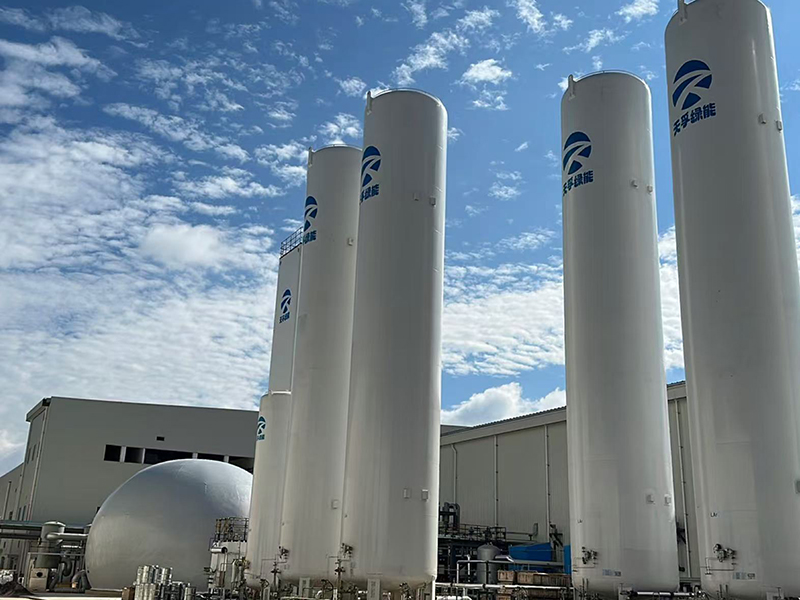
Older ASUs can improve energy efficiency by upgrading compressor components and installing variable frequency drives (VFDs) to match power use with actual gas demand. Plants can also increase capacity by upgrading the PPU, turbo-expander, and distillation system instead of replacing the entire plant. These upgrades may increase production capacity by 10%–15%, but the existing cooling system should be checked to ensure it can support the additional load.
Replacing older DCS or PLC systems with advanced process control (APC) can improve ASU stability and efficiency. APC automatically adjusts valves, compressor loads, and reflux ratios based on real-time process data. This helps maintain stable gas production, reduce off-spec gas and venting, shorten startup time, and lower power consumption during periods of high electricity demand.
Operators must carefully compare the operational expenses (OpEx) and capital expenditure (CapEx) of a targeted overhaul against designing and commissioning a new small, medium, or large-scale Air Separation Unit. A comprehensive modernization program can reliably extend the life of an existing facility by 10 to 15 years at a fraction of the cost of a new build. The analysis must account for the projected energy savings, reduced maintenance frequencies, and increased production capacities resulting from the upgrades.
Decision-makers must heavily factor in the hidden costs associated with new installations. Greenfield projects require extensive civil works, foundation pouring, and structural steel erection. Permitting processes for new industrial emissions and power grid connections can take years. The extended downtime required to demolish an old plant and commission a new one results in massive lost revenue. Targeted overhauls can be executed during standard turnaround windows, preserving continuous cash flow.
Evaluation Factor | Targeted Modernization | Full Plant Replacement |
|---|---|---|
Initial Capital Expenditure (CapEx) | Low to Moderate (Targeted components) | Extremely High (Full engineering and build) |
Implementation Timeline | 3 to 6 months (Executed during turnarounds) | 24 to 36 months (Including permitting) |
Energy Efficiency Gains | Significant (VFDs, APC, Aero-upgrades) | Maximum (Latest OEM technology) |
Civil Works & Permitting | Minimal to None | Extensive (Foundations, grid connections) |
Supply Disruption Risk | Low (Managed via phased scheduling) | High (Requires long-term backup supply) |
Long ASU shutdowns can interrupt gas supply and affect downstream operations. Plants should increase LOX and LIN storage before maintenance and arrange temporary backup supply when needed. Phased maintenance can also keep some systems operating during the overhaul. Operators should also confirm that vaporizers can provide enough gas when the main ASU is offline.
ASU upgrades should follow AIGA and CGA safety standards for cryogenic equipment, pressure systems, and oxygen service. Modified cold box piping and high-pressure lines should be properly inspected before startup. Workers should use suitable PPE, anti-static clothing, and non-sparking tools in high-risk areas. Dry, oil-free nitrogen should also be used for purging to reduce contamination and safety risks.
Selecting the right turnaround partners determines the success or failure of a life extension project. Establish strict criteria for shortlisting engineering firms and mechanical contractors. Demand proven experience with specific plant capacities, whether small, medium, or large-scale facilities. General industrial contractors lack the specialized knowledge required to handle cryogenic aluminum welding, perlite handling, and high-speed turbo-machinery alignment. Ask for specific case studies detailing their work on similar cryogenic distillation columns.
Ensure your chosen vendors have guaranteed access to OEM-grade parts. Installing substandard seals, bearings, or valves in a cryogenic environment guarantees premature failure. Demand a verifiable safety record in cryogenic environments. Review their historical incident rates and their specific procedures for working in oxygen-enriched and nitrogen-asphyxiation hazard zones. A contractor's safety culture must align perfectly with the strict demands of industrial gas operations. Verify their quality assurance and quality control (QA/QC) documentation processes to ensure every bolt torque and weld is properly recorded.
Commission a comprehensive third-party plant audit, including thermodynamic modeling and mechanical integrity testing, to establish an accurate performance baseline.
Build a data-driven business case for modernization by quantifying the exact energy savings achievable through VFD installations and advanced process control upgrades.
Secure liquid gas backup supply contracts and maximize on-site LOX/LIN storage at least two months prior to any scheduled turnaround to guarantee uninterrupted downstream supply.
Schedule immediate thermographic inspections of the cold box to identify and map any existing insulation voids or internal cryogenic leaks before finalizing the overhaul scope.
A: The standard lifecycle of a cryogenic plant is typically 20 to 30 years. By implementing proactive predictive maintenance, replacing degrading control systems, and executing targeted mechanical overhauls, operators can successfully extend the operational lifespan to 40 years or more. This depends heavily on baseline operating conditions, feed air quality, and maintenance consistency.
A: Operators must monitor five critical stages: 1. Dust removal (filter degradation), 2. Compression (impeller and bearing wear), 3. Purification (molecular sieve exhaustion), 4. Cryogenic cooling (turbo-expander seal leaks), and 5. Distillation (tray damage and column fouling). Wear in any stage cascades, reducing overall plant efficiency.
A: Energy efficiency can be drastically improved by upgrading advanced boosting turbo-expanders with modern aero-components, optimizing the main air compressor with variable frequency drives (VFDs), and implementing advanced process controls (APC) to minimize wasteful venting and stabilize thermodynamic profiles.
A: Visible frost, heavy condensation, or ice spotting on the exterior casing are primary indicators. Increased perlite consumption, localized cold spots detected via thermal imaging, and unexplained drops in overall thermal efficiency point to internal leaks or compromised insulation requiring immediate repair.
A: Standard interval guidelines suggest major servicing every 16,000 to 24,000 running hours. Modern facilities are shifting toward condition-based monitoring, utilizing continuous vibration and temperature data to dictate maintenance schedules. This safely extends intervals and prevents unnecessary tear-downs.
A: Older plants face risks from metal fatigue due to decades of thermal cycling, potential hydrocarbon buildup in the main reboiler (which poses severe explosion risks), and degraded insulation. Adhering to AIGA/CGA safe practices guides is mandatory to mitigate these specific aging-plant hazards.
A: Yes. Modern DCS and APC systems sequence cooling and distillation phases far more efficiently than legacy controls. They safely accelerate ramp-up times by continuously adjusting valve positions based on real-time temperature differentials, allowing the plant to closely match gas demand much faster.


