

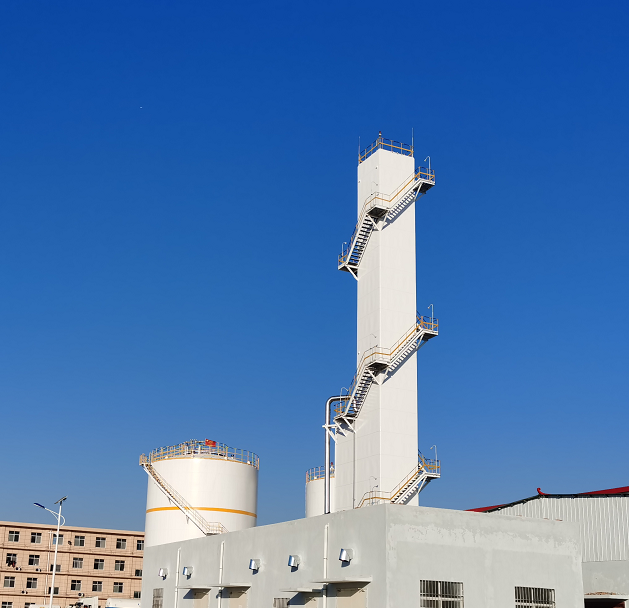


| Quantity: | |
|---|---|


The industrial nitrogen generation process relies on advanced cryogenic air separation, a method engineered for absolute precision and bulk capacity. By systematically cooling atmospheric air to extreme cryogenic temperatures (below -196°C), the system forces gaseous air into a liquid state. This is followed by fractional distillation, a meticulous physical separation process that isolates nitrogen from oxygen, argon, and trace atmospheric gases based on their distinct boiling points. The foundational steps of this operation include:
Air Compression: Ambient atmospheric air is drawn through heavy-duty multi-stage filters and compressed to a precise pressure range of 5–10 bar, creating the initial mechanical force required for the separation cycle.
Pre-Cooling & Purification: The pressurized air stream is directed into a pre-cooling unit and passed through advanced molecular sieve beds. This scrubbing stage aggressively extracts moisture, CO₂, and hydrocarbons, preventing ice formation and equipment blockages in the downstream freezing zones.
Liquefaction: The purified air enters the cryogenic distillation column. Through a sophisticated network of highly efficient heat exchangers and rapid expansion turbines, the air is subjected to extreme thermal reduction until it transitions fully into a liquid state.
Fractional Distillation: Inside the vertically integrated distillation trays, the liquid air undergoes precise thermal separation. Nitrogen, possessing a lower boiling point of -196°C, vaporizes and ascends to the upper collection chambers. Conversely, the heavier oxygen-rich liquid, with a higher boiling point of -183°C, cascades to the bottom of the column for distinct harvesting or venting.
The structural integrity and operational reliability of this nitrogen plant depend on heavily engineered, industrial-grade components. Every core element is fabricated using premium high-strength stainless steel and specialized aluminum alloys, specifically chosen to endure extreme thermal contraction and prevent material fatigue under deep cryogenic conditions. The primary components include:
Air Compressor: A heavy-duty rotary or centrifugal unit that pressurizes incoming ambient air, providing the continuous kinetic foundation for the entire separation cycle.
Molecular Sieves/Adsorbers: Twin-bed desiccant towers filled with highly porous zeolite materials that trap CO₂, moisture, and trace impurities at a molecular level before they reach the cold box.
Heat Exchangers: Intricately brazed aluminum plate-fin structures that facilitate reverse-flow heat exchange, maximizing thermal recovery and cooling the incoming air to deep cryogenic temperatures with minimal energy loss.
Cryogenic Distillation Column: A towering vertical pressure vessel engineered with specialized internal trays or structured packing, serving as the primary arena for liquid-vapor fractional separation.
Expansion Turbine: A precision-machined, high-speed aerodynamic component that rapidly expands compressed gas, generating the extreme refrigeration capacity required to maintain the liquefaction process.
Liquid Nitrogen Storage Tanks: Double-walled, vacuum-insulated cryogenic vessels designed to safely warehouse liquefied nitrogen for future vaporization, pipeline distribution, or direct transport.
Item | Specification |
|---|---|
Nitrogen Purity | 99.9%–99.9999% |
Nitrogen Capacity | 1,000–50,000 Nm³/h |
Nitrogen Form | Gas / Liquid |
Oxygen Content | ≤10 ppm (customizable) |
Operating Pressure | 5–20 bar |
Cooling Method | Cryogenic Air Separation |
Control System | Siemens PLC / DCS |
Power Supply | Customized |
Installation | Skid-mounted / Modular |
Certification | CE, ASME, ISO9001 |
Cryogenic nitrogen plants are the definitive solution for demanding industrial sectors that require an uninterrupted supply of ultra-high purity and bulk supply. Backed by extensive delivery records and long-term operational data across high-tech industries, these systems provide critical inerting and blanketing capabilities where atmospheric contamination could lead to catastrophic product failure. Key application sectors include:
Semiconductor Manufacturing: Establishes absolute inert atmospheres inside cleanrooms and fabrication chambers, preventing microscopic oxidation on silicon wafers during delicate doping and etching processes.
Aerospace: Utilized for purging and pressurizing rocket fuel tanks, as well as conducting rigorous component stress tests in completely oxygen-free, sub-zero environments.
Pharmaceuticals: Provides a sterile, non-reactive blanket for active pharmaceutical ingredient (API) synthesis, and facilitates rapid freeze-drying (lyophilization) of sensitive biological compounds.
Energy Sector: Essential for purging and inerting liquefied natural gas (LNG) storage terminals, offshore platforms, and vast pipeline networks to eliminate combustion risks.
Chemical Processing: Displaces oxygen in reactor vessels to prevent unwanted oxidation, thermal degradation, or explosive hazards during highly sensitive, high-purity chemical reactions.
Investing in cryogenic air separation technology yields substantial operational dividends for large-scale facilities. Beyond the fundamental gas production, these systems integrate fully automated DCS/PLC control architectures with multiple safety interlocks, enabling one-touch start/stop functionality, remote real-time monitoring, and automatic shutdown protocols during anomalies. The core advantages include:
Ultra-High Purity: Consistently achieves an exceptional 99.9999%+ purity level by systematically stripping away even the most minute traces of residual oxygen, argon, and moisture.
Large-Scale Production: Engineered for massive industrial throughput, efficiently delivering high-volume demands (e.g., thousands of Nm³/hour) without fluctuations in pressure or purity.
Multi-Product Output: Features a versatile process design capable of simultaneously co-producing commercial-grade liquid nitrogen, liquid oxygen, and argon from a single operational cycle.
Long-Term Cost Efficiency: By utilizing advanced turbo-expanders and optimized heat recovery networks, the system drastically lowers the specific power consumption per unit of nitrogen produced, ensuring lower operational costs per unit for bulk users.
Modular Skid-Mounted Design: Core mechanical assemblies are highly integrated onto pre-fabricated skids, dramatically reducing on-site construction timelines, minimizing installation expenses, and simplifying final commissioning procedures.
Our cryogenic nitrogen plant is designed for continuous large-scale production where gas purity, production stability, and operating efficiency are critical. Compared with PSA nitrogen generators, cryogenic air separation provides significantly higher production capacity while simultaneously producing nitrogen, oxygen, and argon from a single process.
Each project is engineered according to the customer's required purity, flow rate, installation conditions, and future expansion plans. Our experienced engineering team provides complete support from process design and equipment manufacturing to installation, commissioning, operator training, and lifetime technical service.
While cryogenic distillation remains the ultimate standard for bulk, ultra-pure nitrogen generation, facility planners must evaluate specific operational realities before deployment. Understanding these operational characteristics ensures the system aligns perfectly with the site's infrastructure and long-term production schedules.
High Capital Cost: The integration of specialized cryogenic metals, complex distillation columns, and heavy-duty compression machinery requires significant upfront investment compared to non-cryogenic alternatives.
Energy Intensity: The physics of achieving and maintaining deep sub-zero temperatures consumes substantial electricity for compression and cooling, primarily driven by the main air compressors and refrigeration cycles.
Complex Maintenance: Preserving the integrity of vacuum-insulated cold boxes, high-speed expansion turbines, and molecular sieves means specialized expertise is needed for cryogenic systems and preventative maintenance.
Slow Startup: Unlike on-demand systems, reaching the extreme thermal equilibrium required for optimal fractional distillation takes hours to reach optimal operating temperatures, making it best suited for continuous operations.
To assist in selecting the optimal gas generation technology for your facility, the following matrix contrasts the operational parameters of cryogenic distillation against standard adsorption and permeation methods.
Feature | Cryogenic Plant | PSA/Membrane Systems |
Purity | 99.999%+ | Up to 99.999% (PSA) / 99.5% (membrane) |
Scale | Large-scale (1000+ Nm³/h) | Small to medium-scale (1–500 Nm³/h) |
Energy Use | High | Moderate to low |
Flexibility | Fixed output, multi-product | On-demand, single-product |
Summary: A cryogenic nitrogen plant represents the absolute gold standard for heavy industries requiring ultra-pure nitrogen gas or liquid in massive bulk quantities. While the initial financial outlay and mechanical complexity are higher than alternative methods, its unmatched purity levels and sheer scalability make it an indispensable asset. For sectors like advanced electronics manufacturing, aerospace engineering, and global energy distribution, where gas volume and purity directly dictate end-product viability, the long-term reliability and lower per-unit production costs of a cryogenic facility far outweigh the initial deployment considerations.
From initial consultation to plant commissioning, we provide complete turnkey solutions for industrial gas projects. Our services include process design, equipment manufacturing, civil engineering guidance, installation supervision, commissioning, operator training, and after-sales technical support.
With over 25 years of experience in cryogenic air separation technology, we have successfully delivered nitrogen plants to customers in more than 50 countries, helping manufacturers reduce gas procurement costs while ensuring a stable on-site nitrogen supply.
Yes, we are a primary, experienced manufacturer specializing in deep cryogenic air separation technology for over 25 years, operating our own heavy-duty fabrication and testing facilities.
Absolutely. We provide deep custom-engineered solutions tailored to your specific application. Our engineering team utilizes advanced 3D modeling to adapt the plant layout for tight spatial constraints, extreme local climate conditions, and highly specific peak-yield or purity targets.
Yes, we have successfully engineered and supplied our air separation plants to over 50 countries worldwide. Every pressure vessel and piping network strictly complies with rigorous international manufacturing and safety standards, including ASME, CE, PED, and ISO quality management systems, ensuring absolute global compliance.
We offer comprehensive, lifecycle after-sales support including:
✔ Technical Consultation - 24/7 expert guidance from seasoned cryogenic engineers
✔ Remote Monitoring - Real-time DCS system performance tracking and diagnostic alerts
✔ Maintenance Packages - Scheduled structural inspections & precise consumable replacements
✔ On-site Service - Experienced engineers available for overseas dispatch and hands-on troubleshooting
✔ Spare Parts Supply - Authentic, factory-original components backed by a solid 18-month warranty
✔ Operator Training - Deeply customized training programs designed to empower your client's technical team
We cordially invite you to visit our manufacturing facility for a firsthand inspection of our fabrication capabilities, or to participate in our online technical exchange seminars for detailed process discussions.
We welcome you to reach out to our technical specialists for detailed consultations, layout planning, and customized engineering solutions.
To recommend the most suitable solution, please provide your required nitrogen purity, flow rate, operating pressure, daily consumption, installation location, available utilities, and whether liquid nitrogen production is required. Our engineers will prepare a customized technical proposal and quotation.


