
Views: 0 Author: Site Editor Publish Time: 2026-04-29 Origin: Site


Pressure on industrial production rarely comes from one direction. Output targets rise, energy costs matter more, process stability becomes harder to protect, and expansion plans cannot wait for weak utility support to catch up. That is why cryogenic oxygen plant for large-scale industrial use has become a serious option for facilities where oxygen is tied directly to productivity and operating control. Large industrial users do not invest in this type of system simply to produce gas on site. They use it because stable oxygen supply helps protect uptime, improve process consistency, and support long-term growth. JINHUA GAS develops oxygen plant solutions for that exact kind of industrial reality, where supply reliability and plant performance need to move together.
One of the clearest reasons large industries use cryogenic oxygen plants is simple: their oxygen demand is too large and too constant to be treated as a minor utility issue. In heavy industrial settings, oxygen is often tied directly to core operations, which means supply interruptions can affect production schedules, equipment loading, and overall plant performance. A system designed for large-scale oxygen production helps solve that problem by turning oxygen into a stable part of the site’s own operating structure.
This matters because industrial demand is not the same as occasional consumption. A facility running major thermal, chemical, or environmental processes may need oxygen every day, across multiple shifts, with very little room for fluctuation. In that situation, a cryogenic oxygen plant offers something more valuable than simple output. It offers continuity. That continuity helps operators plan production with more confidence and reduces the risk of depending too heavily on outside timing.
A strong plant also supports the reality of industrial pressure. Demand may rise during intensive production windows, remain steady during long operating cycles, and still need to stay under close control. A cryogenic oxygen system is attractive because it is built for exactly that environment. It does not exist for light or occasional use. It is meant to support real industrial load.
This is one of the main business reasons large users consider on-site oxygen generation. The plant is not just an equipment purchase. It becomes part of how the facility sustains output over time.
Large industries value predictability. Even a technically strong production line can lose efficiency when a critical utility is tied too closely to delivery timing outside the plant’s control. One of the strongest advantages of a cryogenic oxygen plant is that it reduces that dependence.
When oxygen is generated as part of the site’s own infrastructure, industrial users gain more direct control over availability. That helps reduce uncertainty in production planning and creates a more reliable foundation for daily operation. Instead of constantly working around external supply schedules, the facility can align oxygen support more closely with its real production rhythm.
This benefit is especially important when demand is both large and process-sensitive. In steelmaking, chemical operations, power-related uses, and other high-demand settings, oxygen is not simply consumed. It actively shapes how the production system performs. A more dependable supply can therefore improve confidence across the site, not just inside one isolated unit.
It also changes how managers think about oxygen. Rather than treating it as a separate purchased input, they can treat it as an integrated production utility. That shift in control is one reason cryogenic oxygen plants remain attractive in large industrial settings.
Reliability depends on more than generation alone. Oxygen must also be stored and distributed effectively across the facility. A cryogenic oxygen plant becomes more valuable when it is connected to a practical storage and distribution structure that helps oxygen move where it is needed without unnecessary delay or loss.
In large sites, several departments or process units may depend on the same oxygen system. That means coordination matters. A centralized plant with strong storage and internal distribution support can improve how different areas of the site receive oxygen and how managers balance flow against changing demand.
This is a meaningful commercial advantage because it strengthens reliability beyond the production unit itself. The site is not only generating oxygen more independently. It is also handling it in a way that supports more stable plant-wide use. JINHUA GAS understands that industrial users do not judge supply value by production figures alone. They judge it by whether oxygen remains dependable all the way to the point of use.
Benefit | Operational result | Good angle for the article |
Continuous production | Fewer supply interruptions | Stress plant reliability |
On-site control | Better coordination with operations | Stress flexibility |
Stable oxygen availability | More consistent process conditions | Stress quality |
Scalable design | Easier long-term planning | Stress future growth |
This is why the benefits of cryogenic oxygen plants should be viewed across the whole supply chain inside the facility. The plant works best when generation, storage, and distribution strengthen one another.
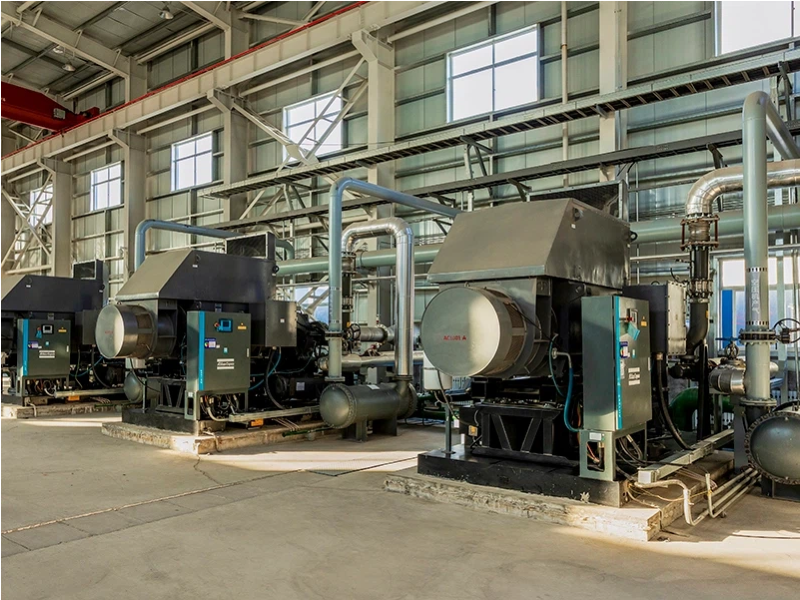
Large industries do not use cryogenic oxygen plants only because they need gas in volume. They also use them because stable oxygen supply helps keep process conditions more consistent. That is a major business benefit, especially for facilities where production quality depends on controlled reaction, combustion, oxidation, or enrichment conditions.
When oxygen availability varies too much, process performance can become harder to manage. Even if the plant continues running, fluctuations in supply can weaken consistency and complicate operations. A cryogenic oxygen plant helps address that problem by providing a steadier source of oxygen aligned with the demands of large-scale industrial use.
This benefit is especially persuasive for industrial buyers evaluating long-term value. They are not comparing oxygen supply methods only by immediate output. They are also looking at how supply quality affects broader production results. More stable oxygen availability can support steadier process performance, which in turn supports output quality, operating rhythm, and confidence in daily execution.
That is why the business case goes beyond gas generation. A cryogenic oxygen plant contributes to the production system as a whole. It helps protect process conditions that matter to plant managers, engineers, and operations teams alike.
In practical terms, this can also reduce friction between production planning and utility support. When oxygen behaves more predictably, process teams can focus more on operating targets and less on supply uncertainty. That is one of the quieter but more important industrial oxygen supply benefits.
Another reason large industries use cryogenic oxygen plants is that long-term demand rarely stays fixed. A site may expand output, add process units, diversify applications, or raise performance expectations over time. A system that only solves today’s demand without considering tomorrow’s growth can quickly become restrictive.
Cryogenic oxygen plants are attractive because they support a stronger long-term planning base. When capacity is aligned with current and future industrial needs, plant managers gain more flexibility in how they think about growth. Expansion no longer depends entirely on whether an outside supply arrangement can keep pace. Instead, the site has a more strategic foundation for scaling oxygen support alongside broader production development.
This matters for commercial evaluation because industrial investment decisions are rarely short-term. Facilities usually want to understand whether an oxygen solution can serve not only present operations, but also future demand. A plant with scalable design offers a clearer answer to that question.
From this perspective, the value of the system is not limited to present-day reliability. It also lies in the room it creates for future operational ambition.
Growth is not just about larger volume. It is also about running smarter. Large industrial users increasingly care about automation, monitoring, and energy performance because these factors influence costs, response speed, and long-run operating stability. A cryogenic oxygen plant can support those broader strategies when it is designed with modern plant control in mind.
This is where the commercial appeal becomes more strategic. An oxygen plant that fits into remote monitoring, centralized control, and data-based maintenance planning offers more than basic supply. It supports a more coordinated industrial operating model. That matters for sites trying to improve visibility, reduce avoidable downtime, and manage utilities with greater precision.
Energy thinking also belongs here. A large industrial user may not evaluate a plant only by whether it produces oxygen, but by how effectively it does so over time. A plant that fits broader energy and process strategies can strengthen its value well beyond initial installation.
JINHUA GAS positions its oxygen plant solutions around this practical industrial direction. Continuous supply remains the foundation, but smart control, reliable storage, and scalable system design are what help transform that foundation into a long-term business advantage.
Industrial buyers usually reach a point where technical features alone are not enough. Capacity numbers, purity levels, and system configuration are important, but they do not fully explain why one oxygen solution feels more suitable for a large site than another. The real decision often comes down to business value.
A cryogenic oxygen plant becomes attractive when it improves predictability, strengthens process stability, supports better planning, and gives the site more control over a critical utility. Those are not abstract advantages. They affect how a facility performs day after day.
This is why large industries continue to evaluate cryogenic plants seriously. The question is not only whether the plant can produce oxygen. The question is whether it can support the wider industrial system in a way that reduces pressure and improves confidence. When the answer is yes, the plant becomes much more than a gas unit. It becomes part of the site’s long-term operating strategy.
Large industries use cryogenic oxygen plants because oxygen supply affects far more than one utility line. It influences uptime, process consistency, operating control, and the ability to plan for growth with more confidence. That is the real value of a cryogenic oxygen plant for large-scale industrial use. It gives the facility a stronger foundation for dependable supply, steadier process performance, and more flexible long-term development. With JINHUA GAS, industrial users can apply these advantages through a system designed for continuous operation, strong storage and distribution support, and smarter plant integration. If your site is looking for a more reliable path to large-scale oxygen supply, contact us to learn more about the right Cryogenic Oxygen Plant for Large-Scale Industrial Use for your project.
Large industries prefer them because they provide stable oxygen supply for high-demand operations and help reduce the risk of production disruption caused by unreliable gas availability.
The main benefits include continuous supply, better coordination with plant operations, stronger process stability, and more room for future growth.
On-site supply reduces dependence on outside delivery schedules and gives the facility more direct control over oxygen availability, storage, and distribution.
Yes. A scalable cryogenic oxygen plant can support rising demand, fit broader automation strategies, and provide a stronger base for long-term industrial development.


