
Views: 0 Author: Site Editor Publish Time: 2026-09-24 Origin: Site


Halting cryogenic distillation processes introduces severe mechanical and thermal vulnerabilities. An improperly executed shutdown can result in catastrophic equipment damage, safety breaches, or extended downtime. Plant managers and process engineers face the challenge of standardizing complex shutdown sequences. You must balance the pressure of minimizing production loss against the strict safety requirements of handling cryogenic liquids and high-pressure gases. Establishing a rigorous, verifiable Air Separation Unit Shutdown Procedure requires evaluating current Standard Operating Procedures (SOPs). You must assess automation capabilities, manage environmental impacts, and potentially partner with specialized turnaround contractors. Executing these steps correctly ensures compliance, safety, and long-term asset longevity for your facility. We will break down the exact phases, risk mitigation strategies, and operational states required to safely bring a cryogenic plant offline without compromising the cold box internals or rotating machinery.
Sequential Precision: A compliant shutdown requires strict adherence to phased load reduction, liquid inventory management, and controlled deriming to prevent thermal shock to the cold box and piping.
Safety and Compliance: Effective procedures mandate rigorous Lockout/Tagout (LOTO) protocols, continuous atmospheric monitoring for oxygen enrichment or deficiency, and cryogenic hazard mitigation.
State-Dependent Strategies: The chosen procedure must align with the operational goal—differentiating between short-term warm standby, long-term cold standby, total plant turnarounds, and permanent decommissioning.
SOP Documentation and Vendor Evaluation: Upgrading shutdown execution requires strict version control of documented SOPs, evaluating digital automation software, and selecting specialized maintenance contractors based on their safety records and cryogenic expertise.
Table of Contents
Operators do not execute a uniform shutdown sequence for every situation. The chosen methodology depends entirely on the operational objective. You must categorize the shutdown state accurately to allocate resources, manage timelines, and protect the physical integrity of the plant. Field teams must understand the end goal before touching a single valve on the control board.

A planned turnaround is used for major maintenance, molecular sieve replacement, or cold box inspection. The plant should be fully depressurized, drained, warmed to ambient temperature, and isolated before work begins. Because these shutdowns involve many contractors, parts, and specialized equipment, preparation usually starts well in advance.
Emergency trips require fast isolation to protect the Main Air Compressor (MAC), expanders, and other equipment during power loss or process problems. Automated safety systems and blowdown valves help prevent gas backflow and equipment damage. Operators should also monitor vibration and bearing temperatures while the equipment slows down.
Cold standby keeps liquid inventory and cryogenic temperatures inside the plant, allowing a faster restart but requiring energy to control boil-off gas. Warm standby drains the liquid and allows the plant to warm up, which reduces standby energy use but requires more time and energy for restart. The choice mainly depends on the expected shutdown duration.
Permanent ASU shutdown requires all cryogenic liquids and gases to be safely removed before dismantling begins. Operators should purge and isolate product and utility lines, confirm that no trapped gas remains, and prepare the plant for safe removal. The source specifies purging with dry nitrogen until oxygen analyzers read 20.9%.
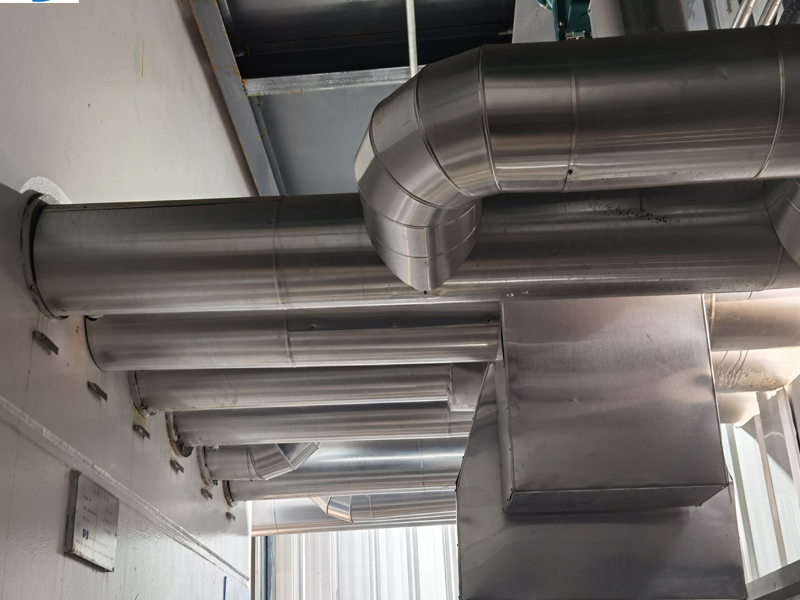
Executing a controlled shutdown requires strict adherence to phased operational steps. Bypassing these phases introduces severe mechanical risks. Every Air Separation Unit relies on precise thermal and pressure management during load reduction. Field operators and board operators must work in tandem to execute these phases without triggering a process upset.
Operators gradually reduce the Main Air Compressor (MAC) load and feed air to the cold box while isolating oxygen, nitrogen, and argon product lines. The DCS, inlet guide vanes (IGVs), anti-surge controls, and vent valves should work together to maintain stable pressure and prevent compressor surge or gas backflow during shutdown.
Once gas production stops, liquid nitrogen (LIN), liquid oxygen (LOX), and liquid argon (LAR) should be transferred to storage or safely vaporized. Operators must carefully control valves and pressure because trapped cryogenic liquid can expand rapidly as it warms. Low-point drains and thermal relief systems should also be checked before moving to the next phase.
The MAC, Booster Air Compressor (BAC), and cryogenic expanders should be gradually brought to a complete stop. Lube oil and seal gas systems must remain active during coast-down to protect bearings and seals. Operators should monitor vibration and bearing temperatures, then use the turning gear where required to prevent rotor damage during cooling.
Warm, dry nitrogen is used to gradually warm the cold box and remove moisture and CO₂ before the system is opened. Operators should monitor exhaust dew point and heat exchanger temperatures to ensure the system is dry and warming evenly. The warming rate should follow manufacturer limits, with the source noting a typical limit of 2°C per minute, to reduce thermal stress on aluminum heat exchangers.
Shutdown Phase | Primary Action | Key Equipment Involved | Primary Risk Factor |
|---|---|---|---|
Load Reduction | Decrease feed air and isolate products | Main Air Compressor, DCS, Pipeline Valves | Compressor surge and rotor damage |
Liquid Draining | Transfer or vaporize cryogenic inventory | Distillation Columns, Drain Valves, Vaporizers | Trapped liquid over-pressurization |
Equipment Securing | Coast-down rotating machinery | Compressors, Expanders, Lube Oil Pumps | Bearing failure from loss of lubrication |
Deriming | Warm cold box to ambient temperature | Heat Exchangers, PPU, Nitrogen Heaters | Thermal fatigue and aluminum rupture |
Handling cryogenic fluids and high-pressure gases requires uncompromising safety standards. A procedural failure during a shutdown sequence directly threatens personnel and surrounding infrastructure. You implement overlapping layers of protection to mitigate these inherent risks. Field teams must treat every pipe as if it contains live, high-pressure cryogenic fluid until proven otherwise.
Shutdown procedures should be stored in a centralized digital system so operators always use the latest approved version. Digital SOPs reduce errors caused by outdated manuals and help ensure each shutdown follows the same process. Electronic sign-offs also provide a clear record for review and safety audits.
Cryogenic liquids can cause serious cold burns and make carbon steel brittle if leaks occur. Operators should wear suitable PPE, including cryogenic gloves and face shields, when handling drain valves or cryogenic equipment. Thermal imaging can also help detect hidden leaks before they damage equipment or structures.
Venting oxygen can increase fire risks, while nitrogen can reduce oxygen levels and create asphyxiation risks, especially in confined areas. Operators should use personal and area oxygen monitors, follow confined-space entry procedures, and provide enough ventilation to prevent dangerous gas buildup.
High-pressure gas venting can create dangerous noise levels and affect nearby areas. Vent silencers should be used on major blowdown valves, and operators should follow local noise requirements. Planned venting can also be scheduled at suitable times to reduce its impact on surrounding areas.
Maintenance should only begin after high-pressure air, electrical power, and product lines are fully isolated. Blind flanges or double block and bleed arrangements can provide safer isolation than a single closed valve. LOTO points should be clearly tracked and checked again by a supervisor before maintenance begins.
Hazard Type | Source | Required PPE / Mitigation | Atmospheric Limit |
|---|---|---|---|
Oxygen Enrichment | LOX draining, GOX venting | Flame-resistant clothing, personal O2 monitor | Do not exceed 23.5% O2 |
Asphyxiation | LIN draining, GAN venting | Personal O2 monitor, forced ventilation | Do not drop below 19.5% O2 |
Cryogenic Burns | Manual drain valves, uninsulated pipes | Cryo-gloves, face shield, long sleeves | N/A (Physical contact hazard) |
Acoustic Trauma | High-pressure blowdown valves | Double hearing protection (plugs + muffs) | Do not exceed 85 dBA without PPE |
Executing a flawless shutdown requires more than just internal procedures. You evaluate the technology driving the sequence and the external partners supporting the physical execution. Upgrading these elements reduces risk and shortens the overall outage duration. You must align your internal capabilities with the expertise of specialized vendors.
Automated DCS shutdown sequences can control load reduction, valve operation, and process changes faster than manual procedures. They help reduce human error and compressor surge risks, but require programming, testing, and initial investment. Factory Acceptance Testing (FAT) should be completed before automated shutdown logic is used on the plant.
ASU turnaround contractors should have proven experience with cryogenic equipment, aluminum heat exchangers, and cryogenic valves. They should also meet relevant API/ASME requirements and have a strong safety record. Their ability to handle the PPU, cold box, rotating equipment, and confined-space work should also be reviewed before selection.
A faster turnaround can reduce production losses, but rushing deriming may damage aluminum heat exchangers through thermal stress. Plants should balance downtime costs against equipment safety and avoid excessive heating during thawing. Adding extra time to the turnaround schedule can help manage unexpected delays and reduce the risk of costly equipment damage.
Take the following actions to improve your facility's shutdown readiness:
Conduct a comprehensive gap analysis of current shutdown SOPs against established industry standards.
Audit existing LOTO procedures and verify the physical condition of all double block and bleed isolation points.
Evaluate digital turnaround management software to streamline scheduling and communication for your next planned outage.
Establish a strict baseline for rotating equipment health by recording vibration and temperature data during the next scheduled coast-down.
A: A complete shutdown and deriming process typically takes between 3 to 7 days, depending on the plant's size and the ambient temperature. The deriming phase requires careful, gradual warming to prevent thermal shock to the aluminum heat exchangers. Rushing this process risks severe mechanical damage, so operators strictly adhere to manufacturer temperature gradient limits.
A: Cold standby retains cryogenic liquid inventory inside the plant, allowing for a rapid restart within hours, but requires continuous energy to manage boil-off. Warm standby involves draining all liquids and allowing the plant to reach ambient temperature. It uses minimal energy while idle but requires days to cool down and restart production.
A: Deriming removes residual moisture, carbon dioxide, and potentially hazardous hydrocarbons from the cold box internals. If operators open a cold plant to the atmosphere without deriming, ambient moisture immediately freezes inside the piping. This ice blocks flow paths, damages valves, and severely contaminates the high-purity distillation process upon restart.
A: The primary hazards include oxygen enrichment creating severe fire risks, nitrogen asphyxiation in confined spaces, and cryogenic burns from flashing liquids. Extreme acoustic noise during high-pressure venting and the risk of trapped liquid over-pressurizing isolated pipe sections pose significant threats to personnel and equipment.
A: Operators prevent surge by utilizing automated anti-surge control valves. As the process flow demand drops during shutdown, these valves open to recycle compressed gas back to the compressor inlet. This maintains the minimum required volumetric flow through the compressor stages, preventing flow reversal and violent rotor vibrations.
A: During shutdown, the PPU must be properly isolated and undergoes a thorough regeneration cycle. Operators ensure the molecular sieve beds are completely free of moisture and carbon dioxide before the plant goes offline. Proper PPU management prevents contamination from migrating into the main heat exchangers during the idling period.


