
Views: 0 Author: Site Editor Publish Time: 2026-09-24 Origin: Site


Unplanned downtime in cryogenic air separation carries severe operational and financial stakes. A single mechanical or process failure can halt downstream production for heavy industrial manufacturing and healthcare facilities relying on medical oxygen. Beyond immediate production halts, equipment failures introduce catastrophic safety hazards. Liquid oxygen contamination poses severe explosion risks if hydrocarbons accumulate undetected. Aging infrastructure and unpredictable environmental variables inevitably degrade system performance over time. High ambient humidity and continuous mechanical stress lead to rapid component wear. Measurement drift and filtration breakdowns plague the core stages of compression, purification, and distillation. Plant managers and process engineers need a rigorous technical evaluation framework to maintain operations. We must transition from reactive troubleshooting to engineered, proactive strategies. Implementing robust Air Separation Unit Solutions ensures long-term reliability, safety, and yield stability.
Moisture and Contamination are Primary Threats: Inadequate pre-purification leads to cryogenic freezing and hydrocarbon accumulation, requiring immediate, high-grade molecular sieve and filtration interventions.
Instrumentation Drift Degrades Yield: Undetected sensor misalignment directly impacts gas purity; redundant, self-calibrating measurement systems are mandatory for quality control.
Predictive Maintenance Outperforms Reactive Fixes: Transitioning from schedule-based to condition-based monitoring for compressors and expanders drastically reduces catastrophic mechanical failures.
Safety, Compliance, and Risk Management Drive Solution Selection: All implemented Air Separation Unit Solutions must align with stringent industrial gas safety standards (e.g., EIGA, CGA) and property risk guidelines to mitigate explosion risks in oxygen-rich environments.
Table of Contents
A reliable Air Separation Unit must maintain stable production, required gas purity, and safe operation. Even a short shutdown can affect oxygen, nitrogen, or argon production and create additional costs during maintenance and restart.
When an ASU stops unexpectedly, gas production stops immediately. Products that fail to meet required purity levels may also need to be rejected. This directly reduces plant output and can affect downstream operations that depend on a stable gas supply.
Key impacts include:
Lost oxygen, nitrogen, or argon production
Off-spec gas and rejected output
Disruption to downstream production
Higher emergency maintenance costs
Restarting a cryogenic air separation plant requires significant time and energy. The cold box must return to its required operating temperature before normal production can resume. Compressors may run for an extended period during this process while little or no usable product is produced.
ASU downtime can also be linked to serious safety problems. Hydrocarbons and other contaminants must be prevented from building up in liquid oxygen because they can create dangerous conditions. Reliable filtration, purification, monitoring, and liquid oxygen management are therefore essential parts of safe plant operation.
Repeated equipment failures can increase compliance and operational risks. Plant managers should maintain clear records of safety events, analyzer calibration, equipment vibration, and maintenance activities. These records help demonstrate that the plant is actively controlling risks and maintaining critical equipment.
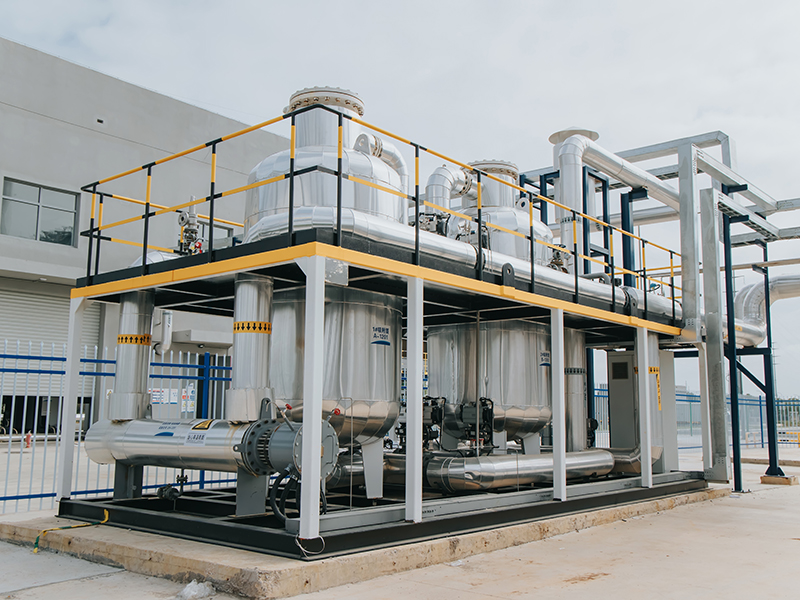
Water vapor and carbon dioxide can enter the cold box if the pre-purification unit does not remove them properly. At cryogenic temperatures, they freeze and can block heat exchangers, reduce gas flow, and increase pressure drop. Using 13X molecular sieves, proper regeneration cycles, and moisture monitoring can help prevent freezing and keep the system running smoothly.

Poor air filtration can allow particles and hydrocarbons to enter the ASU and collect in liquid oxygen, creating serious safety risks. Multi-stage air filtration and chemical filtration can reduce these contaminants before they reach the compressor. Continuous hydrocarbon monitoring and proper liquid oxygen purging are also important for preventing dangerous buildup.
ASU sensors can lose accuracy after long periods of operation, which may affect process control and final gas purity. Oxygen analyzers and other important sensors should be calibrated regularly using certified gases. Redundant sensors, automatic calibration, and digital monitoring can also help detect incorrect readings before they affect production.
Compressors and turbo-expanders operate under continuous mechanical stress, so bearings, seals, and other parts can wear over time. Problems such as compressor surge, high vibration, and overheating may lead to equipment failure and downtime. Continuous vibration monitoring, oil analysis, and temperature monitoring can help detect these problems early and support predictive maintenance.
Plant engineers should choose between targeted upgrades and a complete system overhaul based on equipment condition, budget, and production needs. Modular upgrades, such as replacing molecular sieves or adding new sensors, usually cost less and require less downtime. A complete overhaul requires more investment but can improve long-term efficiency, increase capacity, and solve larger system problems.
An experienced ASU supplier should provide more than equipment. The supplier should understand the complete air separation process and ensure new components work correctly with existing equipment and control systems. Strong engineering support, system testing, safety reviews, and long-term maintenance can help prevent new problems after an upgrade.
ASU upgrades must follow industry safety standards, especially for equipment handling oxygen and cryogenic liquids. Valves, fittings, control systems, and other components should meet relevant safety requirements. Following CGA and EIGA guidelines can help reduce operational risks, protect workers, and maintain safe plant operation.
Facility managers constantly navigate the tension between upfront capital and operational savings. Premium diagnostic equipment requires high initial capital expenditure to procure and install. However, these advanced upgrades drastically reduce long-term operational expenditure year over year. Evaluating this balance dictates the financial health of the gas production facility. Evaluating lifecycle expenditure requires looking at energy efficiency. A highly efficient compressor impeller design might cost more upfront but reduces electrical load by several megawatts over a decade.
Energy consumption drops significantly when heat exchangers remain completely ice-free. Emergency repair costs vanish when predictive monitoring catches bearing wear early. Evaluating lifecycle costs over a 10-to-20-year plant lifespan is essential for accurate forecasting. You must factor in the cost of replacement parts, scheduled downtime, and the energy penalty of operating degraded equipment.
Maintenance Strategy | Initial CAPEX Impact | Long-Term OPEX Impact | Risk of Unplanned Downtime |
|---|---|---|---|
Reactive (Run-to-Failure) | Very Low | Extremely High (Emergency repairs, energy waste) | Critical (High probability of catastrophic failure) |
Preventative (Schedule-Based) | Moderate | High (Replacing healthy parts prematurely) | Moderate (Misses random component failures) |
Predictive (Condition-Based) | High (Sensors, software, training) | Low (Optimized energy, planned repairs only) | Minimal (Anomalies detected weeks in advance) |
Installing robust hardware upgrades requires carefully planned facility outages. You cannot overhaul a main air compressor while the plant is actively producing liquid oxygen. Shutting down the cold box halts all revenue generation temporarily. This reality forces management to weigh short-term losses against future gains. Turnaround planning requires a strict critical path method to ensure all contractors execute their tasks in the correct sequence.
Schedule major upgrades exclusively during mandatory turnaround windows. This strategy minimizes overall production impact and aligns with existing maintenance schedules. Balancing short-term revenue loss against long-term reliability gains requires cross-departmental coordination. Proper planning ensures the cold box restarts smoothly without introducing new process variables. Pre-fabricating piping spools off-site drastically reduces the time required for field welding during the outage.
Proactive mitigation of moisture, filtration, and mechanical failures is absolutely non-negotiable. Safe, compliant, and profitable cryogenic operations demand rigorous, continuous technical oversight. Selecting an engineering partner requires strict shortlisting criteria based on real-world capabilities. Prioritize proven field experience and strict adherence to global safety standards. Demand long-term lifecycle support rather than settling for simple hardware delivery. To secure your facility's operational future, execute the following steps immediately.
Execute a comprehensive site audit focusing on pre-purification unit performance and heat exchanger differential pressures.
Upgrade legacy schedule-based maintenance to continuous vibration monitoring on all rotating equipment.
Calibrate all purity analyzers using certified span gases to establish an accurate baseline.
Review and update all liquid oxygen purge protocols to ensure hydrocarbon accumulation remains well below lower explosive limits.
A: Freezing is primarily caused by the failure of the pre-purification unit to remove atmospheric moisture and carbon dioxide. These trace gases bypass degraded molecular sieves and solidify instantly at cryogenic temperatures. This ice accumulation physically blocks the narrow passages of the main heat exchangers, restricting flow and reducing overall plant efficiency.
A: Molecular sieve lifespan varies heavily based on ambient operating conditions and thermal regeneration cycles. They typically range from 3 to 5 years of continuous service. However, they should be replaced immediately when moisture breakthrough times consistently shorten, indicating the desiccant beads have lost their adsorption capacity.
A: The most severe risks involve the accumulation of hydrocarbons in the liquid oxygen holdup, which can cause catastrophic, uncontained explosions. Additional risks include oxygen-enriched atmospheres creating severe fire hazards, or oxygen-deficient environments leading to asphyxiation in confined plant spaces.
A: Drifting sensors provide inaccurate flow, pressure, and purity data to the central control system. This misinformation leads to improper reflux ratios and incorrect distillation temperatures. Ultimately, this degrades the purity of the final nitrogen, oxygen, or argon products, causing batches to fall below strict customer specifications.
A: Implementing continuous condition-based monitoring is the most effective solution. Specifically, deploying real-time vibration analysis and oil debris monitoring allows operators to detect early bearing degradation and seal wear. This predictive approach prevents catastrophic mechanical failures and eliminates the need for reactive, emergency overhauls.
A: Preventing buildup requires multi-stage ambient air filtration and highly effective pre-purification to block chemical ingress. Furthermore, facilities must utilize continuous total hydrocarbon monitoring systems. Maintaining proper, continuous liquid purge rates from the main condenser is also essential to flush out trace contaminants before they concentrate.
A: Failures immediately halt the supply of critical industrial and medical gases. Heavy manufacturing sectors face stalled welding, cutting, and smelting operations, leading to massive revenue losses. In healthcare, a disruption in medical oxygen supply directly compromises patient safety and hospital operations, making reliable gas generation a life-critical necessity.


