
Views: 0 Author: Site Editor Publish Time: 2026-10-22 Origin: Site


Traditional cryogenic distillation hits hard thermodynamic limits. Industrial gas producers face tightening margins and cannot afford to waste megawatts on inefficient compression. Plant operators constantly balance massive energy consumption against strict product purity requirements. Main air compressors and complex heat exchangers draw enormous power, yet many facilities still rely on static setpoints and reactive manual adjustments. This outdated approach leaves significant optimization potential on the table. Digital monitoring and advanced process analytics bridge the gap between theoretical engineering design limits and real-world dynamic operation. Implementing these tools transforms raw sensor data into actionable performance metrics. Plant managers can finally visualize hidden thermodynamic losses inside the cold box. Real-time data streams replace outdated heuristic assumptions, shifting the facility from manual tuning to algorithmic control. Continuous optimization ensures you operate at peak thermodynamic potential without sacrificing product specifications.
Energy consumption drives the vast majority of OPEX in air separation; digital monitoring directly targets multi-stage compressor inefficiencies and heat integration losses.
Predictive analytics shift plant maintenance from reactive to proactive, minimizing costly unplanned downtime in continuous-flow cryogenic operations.
Effective evaluation of a digital solution requires rigorous assessment of its ability to integrate securely with legacy DCS/SCADA systems.
Successful implementation hinges on data quality, sensor reliability, and operator adoption rather than software features alone.
Table of Contents
Air separation plant efficiency depends on energy consumption, gas purity, compressor performance, and cryogenic process stability. Digital monitoring helps operators identify inefficiencies and maintain reliable oxygen, nitrogen, and argon production.
Specific Power Consumption (SPC) measures the electricity required to produce a unit of gas, commonly expressed in kWh/Nm³.
Higher gas purity or recovery requirements may increase energy consumption, depending on the process design. Operators should optimize production while maintaining the required purity specifications.
For large-scale industrial gas production, Jinhua Gas offers Advanced Cryogenic Air Separation Units with automated monitoring of gas purity, pressure, and flow rates.
Efficiency losses can occur throughout the air compression, purification, cooling, and distillation processes.
Key monitoring points include:
Main Air Compressor (MAC): Power consumption and interstage temperature.
Pre-Purification Unit (PPU): Pressure drop and adsorbent performance.
Main Heat Exchanger: Temperature differences and heat transfer efficiency.
Expansion Turbine: Refrigeration performance and operating stability.
Distillation Columns: Pressure, temperature, and gas purity.
Monitoring these parameters helps operators identify equipment issues and prioritize improvements.
Indicator | What It Measures | Optimization Goal |
|---|---|---|
Specific Power Consumption | Electricity per unit of gas | Reduce energy consumption |
Product Purity | Oxygen, nitrogen, or argon composition | Meet required specifications |
Compressor Performance | Power, pressure, and temperature | Improve compression efficiency |
Heat Exchanger Performance | Heat transfer and pressure drop | Reduce thermal losses |
Plant Availability | Operating reliability | Minimize unplanned downtime |
Digital monitoring systems combine real-time operating data, advanced control, and process analysis to support efficient and reliable air separation operations.

Real-time monitoring helps detect abnormal equipment conditions before they develop into major operating problems.
Sensors can track vibration, temperature, pressure, flow, and other critical parameters across compressors, expansion turbines, and cryogenic equipment.
For steel manufacturing applications, Jinhua Gas's High-Performance Cryogenic Air Separation Plant incorporates PLC/SCADA systems for real-time process monitoring.
Advanced Process Control (APC) helps optimize operating parameters while maintaining product purity and process stability.
Model Predictive Control (MPC) can coordinate compressor settings, column conditions, and production changes using process models.
These systems may reduce unnecessary energy consumption, but performance depends on the plant design, control strategy, and operating conditions.
Digital twins create virtual models of air separation processes to support performance analysis and engineering decisions.
They can help operators evaluate potential equipment upgrades, simulate operating changes, and compare expected performance with actual plant data.
However, model accuracy depends on reliable process information, calibration, and engineering validation.
Technology | Main Function | Potential Benefit |
|---|---|---|
Real-Time Monitoring | Tracks equipment and process data | Earlier fault detection |
SCADA | Displays operating conditions and alarms | Improved process visibility |
APC / MPC | Optimizes operating parameters | Better process stability and energy control |
Digital Twin | Simulates plant performance | Improved planning and optimization |
Predictive Maintenance | Analyzes equipment condition | Reduced unexpected failures |
The right digital monitoring system should match plant capacity, process complexity, and operating requirements.
Industrial buyers should evaluate:
Compatibility with existing PLC, DCS, and SCADA systems.
Sensor accuracy and data reliability.
Cybersecurity and access controls.
Process safety requirements.
Software maintenance and technical support.
Explore Jinhua Gas's Air Separation Plant solutions for customized industrial oxygen, nitrogen, and argon production.
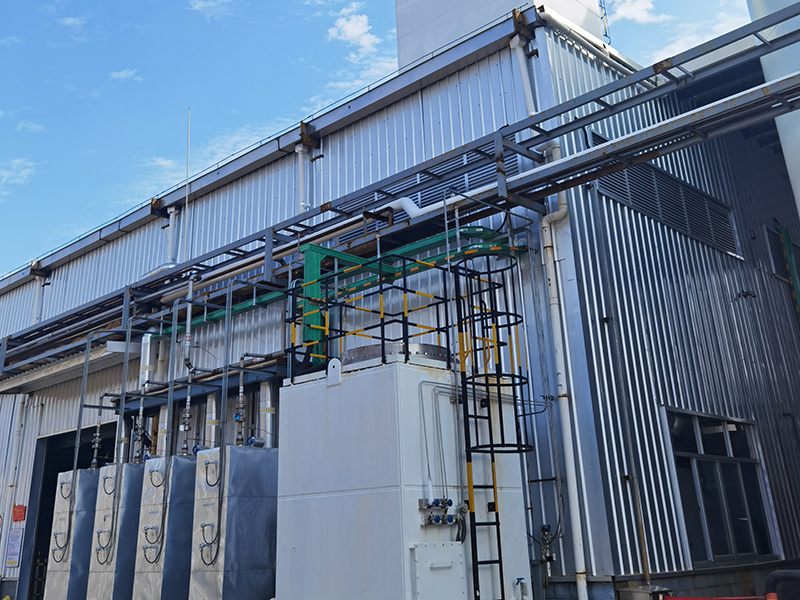
Digital monitoring systems help air separation plants improve operational visibility, equipment reliability, and energy efficiency. Successful implementation requires compatibility with existing control systems, reliable data, and appropriate cybersecurity measures.
New monitoring software should integrate with existing SCADA, DCS, and PLC infrastructure without disrupting plant operations.
Common communication options include OPC UA and Modbus TCP/IP. The appropriate interface depends on the installed equipment and project requirements.
For professional industrial gas production, Jinhua Gas offers Advanced Cryogenic Air Separation Units with PLC/SCADA monitoring capabilities.
Reliable data exchange is essential for effective process monitoring.
Digital systems can collect operating data such as temperature, pressure, flow, gas purity, and compressor performance.
When automated setpoint adjustments are required, they should undergo engineering validation and remain within approved control limits.
Safety Instrumented Systems (SIS) must retain their required independence and protective functions.
Centralized monitoring can help industrial gas companies manage several plants through a unified digital platform.
Operators can compare energy consumption, equipment performance, and operating trends across different locations.
For steel manufacturing applications, Jinhua Gas's High-Performance Cryogenic Air Separation Plant incorporates PLC/SCADA monitoring for continuous industrial gas production.
Digital monitoring supports early detection of abnormal operating conditions in cryogenic air separation plants.
Important monitoring parameters include:
Oxygen and nitrogen purity.
Cold box temperature and pressure.
Molecular sieve purification performance.
Liquid oxygen system conditions.
Relevant hydrocarbon concentrations.
Compressor alarms and equipment status.
Monitoring systems should support applicable AIGA, EIGA, and site-specific safety requirements.
However, digital analytics do not replace independent safety protection, approved operating procedures, or qualified personnel.
Cloud analytics, edge computing, and hybrid architectures offer different advantages. The best choice depends on monitoring requirements, data security, operating speed, and long-term scalability.
Cloud platforms support centralized data storage and long-term performance analysis.
They can help engineering teams compare energy consumption, identify operating trends, and monitor multiple facilities.
Cloud connectivity requires appropriate cybersecurity controls and data access management.
Edge computing processes operating data locally, making it useful for applications requiring low-latency monitoring and analysis.
It can support compressor condition monitoring, alarm processing, and local equipment diagnostics.
Safety-critical control functions must remain within appropriately engineered and validated control systems.
Hybrid systems combine local data processing with centralized analytics.
Local systems can manage time-sensitive monitoring, while remote platforms support reporting, benchmarking, and maintenance planning.
This architecture may provide flexibility for companies operating multiple air separation plants.
System Type | Main Advantage | Typical Application |
|---|---|---|
Cloud Analytics | Centralized data analysis | Fleet monitoring and reporting |
Edge Computing | Local processing and low latency | Equipment diagnostics |
Hybrid Architecture | Combines local and remote capabilities | Multi-plant performance management |
Accurate sensors are essential for reliable digital monitoring.
Older plants may benefit from upgrading selected temperature, pressure, flow, and vibration instruments.
Prioritize critical equipment such as main air compressors, cryogenic heat exchangers, and purification systems.
Sensor selection should consider measurement accuracy, installation requirements, calibration, and maintenance costs.
Evaluation Factor | What Buyers Should Check |
|---|---|
System Compatibility | SCADA, DCS, and PLC interfaces |
Communication | Supported industrial protocols |
Data Accuracy | Sensor performance and calibration |
Cybersecurity | Network protection and access controls |
Scalability | Support for multiple plants |
Safety | Integration without compromising SIS |
Maintenance | Updates, training, and technical support |
Effective digital monitoring combines reliable instrumentation, process visibility, and secure system integration.
For new industrial gas projects, explore Jinhua Gas's Air Separation Plant solutions for customized oxygen, nitrogen, and argon production.
Contact Jinhua Gas to discuss plant automation, monitoring requirements, and system integration.
Conduct a comprehensive sensor calibration audit across all critical rotating equipment and heat exchangers to ensure data fidelity before deploying analytics.
Deploy edge-computing hardware at the main air compressor node to handle high-frequency data collection and surge control without network latency.
Implement advanced process control software in an open-loop advisory mode to build operator trust before enabling automated setpoint adjustments.
Establish a continuous monitoring baseline for specific power consumption (kWh/Nm3) to measure the exact impact of algorithmic optimization.
A: Digital monitoring continuously analyzes real-time thermodynamic data to identify inefficiencies. It allows advanced algorithms to adjust compressor guide vanes and column reflux ratios dynamically. This minimizes wasted compression energy and prevents product venting, keeping the plant operating at its theoretical optimum despite ambient temperature changes.
A: Yes. Modern platforms use vendor-agnostic industrial protocols like OPC UA and Modbus TCP/IP to communicate with legacy DCS and SCADA systems. Upgrading older plants usually requires retrofitting critical nodes with modern IIoT sensors to ensure high-fidelity data collection before applying advanced analytics.
A: Digital twins run physics-based thermodynamic models parallel to the physical plant. They highlight deviations between actual performance and theoretical maximums. Engineers use them to safely simulate process modifications, tighter heat integration, and load changes without risking physical plant stability.
A: Upgrades must align with AIGA and similar regional safe practices for cryogenic plants. Digital tools support compliance by providing automated anomaly detection for hazardous conditions, such as hydrocarbon accumulation in condensers or localized warming in distillation columns.
A: Compressors consume the vast majority of plant power. Monitoring intercooling efficiency and heat exchanger performance prevents thermal leaks. By maintaining critical liquefaction thresholds, the system prevents thermodynamic bleed, meaning compressors do not have to overwork to compensate for lost refrigeration.
A: Predictive maintenance uses vibration and temperature sensors to detect mechanical degradation in rotating equipment early. This allows maintenance teams to replace failing bearings or seals during planned outages, preventing catastrophic failures and costly unplanned downtime in continuous cryogenic processes.


