
Views: 0 Author: Site Editor Publish Time: 2026-10-22 Origin: Site


Industrial gas production relies heavily on continuous electrical power. Compression and refrigeration cycles draw massive electrical loads, making energy consumption the dominant operating expense in these facilities. Plant operators face intense pressure to meet strict environmental targets while maintaining profit margins against volatile global power prices. You must find practical ways to reduce energy intensity without sacrificing product purity or plant reliability.
Energy recovery and process optimization technologies provide the most effective levers for lowering the specific power required per unit of gas produced. Implementing these upgrades directly cuts your carbon footprint and improves baseline profitability. We will evaluate retrofits versus new plant designs to help you achieve these aggressive efficiency goals. This guide outlines a technical framework for identifying energy sinks, selecting appropriate recovery technologies, and managing the operational risks associated with complex facility upgrades.
Compressor optimization and advanced structured packing remain the most verifiable methods for immediate energy reduction in cryogenic cycles.
Integrating membrane technologies for pre-separation offers a viable lower-energy alternative, but requires strict evaluation against final gas purity requirements.
The financial viability of energy recovery systems hinges on the CAPEX-to-OPEX trade-off, with typical payback periods heavily dependent on local electrical power costs and plant load flexibility.
Integrating Air Separation Plants with broader energy conversion processes (industrial symbiosis) unlocks advanced waste-heat and pressure recovery opportunities.
Successful implementation requires rigorous risk mitigation regarding process downtime, system reliability, and contaminant management during the retrofit phase.
Table of Contents
Energy consumption is a key performance indicator for air separation units (ASUs). Establishing an accurate energy baseline helps operators identify inefficiencies, reduce operating costs, and evaluate potential equipment upgrades.
Air compressors account for a major share of electricity consumption in many cryogenic air separation plants. Other energy-intensive processes include air purification, refrigeration, and molecular sieve regeneration.
Key areas to monitor include:
Main Air Compressor (MAC): Compression power and operating efficiency.
Booster Air Compressor (BAC): Additional compression requirements.
Pre-Purification Unit (PPU): Regeneration energy and pressure drop.
Cryogenic Heat Exchangers: Heat transfer efficiency and refrigeration losses.
Distillation Columns: Pressure drop and separation performance.
For industrial oxygen and nitrogen production, Jinhua Gas offers Advanced Cryogenic Air Separation Units incorporating compression, purification, cryogenic heat exchange, and automated control systems.
Specific power consumption measures the electricity required to produce a unit of gas, commonly expressed in kWh/Nm³.
It helps operators compare energy performance across different operating periods.
However, comparisons must use consistent gas purity, delivery pressure, product type, and measurement boundaries.
Regular energy audits help identify equipment and process losses before major upgrades.
A practical audit should include:
Record compressor power and gas production.
Monitor purification system pressure drops.
Check heat exchanger temperature performance.
Compare energy use for liquid and gaseous products.
Review venting losses and part-load operation.
Successful energy upgrades should reduce power consumption without compromising gas purity, production capacity, or reliability.
Before investing, define measurable targets for:
Specific power consumption.
Annual electricity savings.
Equipment maintenance costs.
Expected return on investment (ROI).
Plant availability and product quality.
Jinhua Gas provides customized Air Separation Plant solutions for industrial gas production and energy-efficiency requirements.
Indicator | Measurement | Purpose |
|---|---|---|
Specific Power | kWh/Nm³ | Measure unit energy consumption |
Compressor Power | kW | Identify compression energy demand |
Gas Production | Nm³/h | Monitor production capacity |
Product Purity | % or ppm | Verify gas specifications |
Pressure Drop | kPa | Identify process resistance |
Plant Availability | % | Evaluate operating reliability |
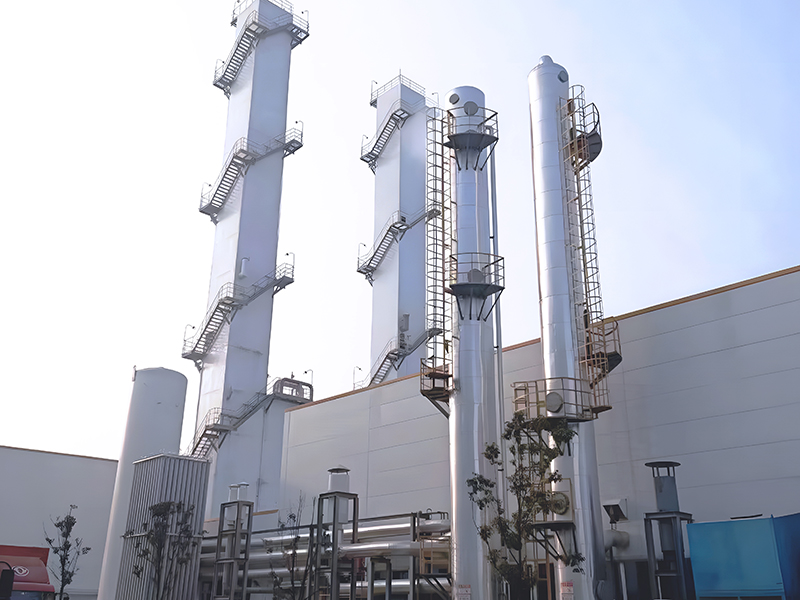

Modern air separation plants improve energy efficiency through advanced compressors, cryogenic heat exchangers, optimized distillation, and intelligent process control. The most suitable technologies depend on plant capacity, gas purity, and operating conditions.
Main air compressors account for a significant share of energy consumption in cryogenic air separation plants.
Efficient compressor designs, improved impellers, and suitable Variable Frequency Drives (VFDs) can help reduce power consumption, especially under variable production loads.
However, VFD performance depends on compressor design and operating requirements.
Jinhua Gas offers Advanced Cryogenic Air Separation Units for industrial oxygen and nitrogen production.
Brazed aluminum heat exchangers (BAHX) transfer heat between process streams while supporting low-temperature separation.
Improving heat transfer and controlling pressure drops can reduce refrigeration losses and help maintain stable plant operation.
Operators should monitor temperature differences, flow distribution, and heat exchanger performance.
Structured packing can improve vapor-liquid contact and reduce pressure drop in suitable cryogenic distillation columns.
This may help lower energy consumption while maintaining required gas purity.
However, packing selection must match the column design, capacity, and separation requirements.
Hybrid systems combine different separation technologies to meet varying gas purity and capacity requirements.
For example, membrane systems may supply nitrogen for applications that do not require ultra-high purity, while cryogenic plants serve larger or more demanding production needs.
The benefits of hybrid systems should be evaluated through project-specific engineering analysis.
Integrating air separation plants with nearby industrial facilities may create opportunities for improved energy utilization.
Potential applications include waste heat recovery, coordinated utility systems, and optimized gas supply.
These solutions are particularly relevant to steel, chemical, and large industrial manufacturing facilities.
Selecting energy-efficient equipment requires more than comparing rated power consumption. Buyers should evaluate gas output, operating flexibility, and long-term performance.
Different gas products require different separation conditions and energy inputs.
Gaseous oxygen, liquid oxygen, nitrogen, and argon production may require different process configurations.
Jinhua Gas's High-Performance Cryogenic Air Separation Plant for Steel Manufacturing is designed for industrial gas production applications requiring continuous supply.
Production Requirement | Main Energy Consideration | Potential Optimization |
|---|---|---|
Gaseous Oxygen | Air compression | Compressor efficiency |
Liquid Oxygen / Nitrogen | Refrigeration and liquefaction | Expander and heat exchanger optimization |
Argon Recovery | Distillation efficiency | Column and reflux optimization |
Variable Gas Demand | Part-load operation | Advanced process control |
Moderate-Purity Nitrogen | Separation energy | Evaluate membrane or PSA options |
Air separation plants should operate efficiently under expected production conditions, including periods of reduced demand.
Buyers should evaluate turndown capability, compressor performance, and automated load control.
Advanced Process Control (APC) may help improve operating stability and reduce unnecessary energy consumption.
Reducing electricity consumption can also reduce indirect carbon emissions, depending on the electricity supply.
Plants should monitor energy usage, production output, and relevant emissions data.
Comparing actual operating performance against a measured baseline helps verify efficiency improvements.
Energy-efficient equipment may require higher initial investment but reduce long-term operating costs.
Buyers should compare capital expenditure (CAPEX), operating expenditure (OPEX), maintenance costs, and expected equipment life.
Payback periods depend on electricity prices, plant utilization, and actual energy savings.
Retrofitting is suitable when existing equipment remains technically and economically viable.
Common improvements include compressor upgrades, process control optimization, and heat exchanger maintenance.
For aging or undersized facilities, a new plant may offer better capacity and efficiency.
Explore Jinhua Gas's Air Separation Plant solutions for customized industrial gas production.
Producing higher gas purity than required may increase operating costs.
Plants should select separation technologies and operating parameters according to actual end-use requirements.
However, purity optimization must always maintain contractual and process safety specifications.
Strategy | Investment Level | Main Benefit |
|---|---|---|
Compressor Optimization | Moderate–High | Reduced compression energy |
Heat Exchanger Improvements | Varies | Better thermal efficiency |
Advanced Process Control | Moderate | Improved load management |
Distillation Column Upgrades | High | Potential separation efficiency gains |
New Air Separation Plant | Very High | Updated capacity and process design |
Actual investment and energy savings require project-specific evaluation.
Major equipment upgrades should be coordinated with planned plant shutdowns to reduce production disruption.
Where appropriate, backup liquid oxygen or nitrogen supply can help maintain industrial gas availability during maintenance.
Moisture, particles, and hydrocarbons can create serious risks in cryogenic air separation systems.
New components should meet applicable cleanliness, material compatibility, and commissioning requirements.
Oxygen-service cleaning, suitable purging, leak testing, and approved startup procedures are essential.
Regular maintenance helps preserve energy efficiency and equipment reliability.
Important activities include:
Monitoring compressor vibration and performance.
Inspecting heat exchangers and cooling systems.
Maintaining control instruments and sensors.
Checking adsorbents and filtration systems.
Following manufacturer-recommended maintenance schedules.
For industrial gas projects, selecting the right equipment requires a balance of production capacity, gas purity, energy consumption, and maintenance needs.
Contact Jinhua Gas to discuss customized air separation plant specifications, equipment configuration, and long-term operating requirements.
Optimizing energy consumption requires a systematic approach to equipment upgrades and process control. You must evaluate your specific operational constraints and product mix before selecting a technology path.
Initiate a comprehensive plant energy audit to establish baseline specific power metrics across all operating modes.
Engage specialized cryogenic engineering firms to conduct feasibility studies on compressor aerodynamic upgrades and structured packing retrofits.
Request detailed lifecycle cost models from equipment vendors to build a robust financial justification based on local power rates.
Secure liquid backup supply contracts well in advance of any planned outage to guarantee uninterrupted customer deliveries during the integration phase.
A: The main air compressor and booster compressors consume the vast majority of electrical power. They compress atmospheric air to process pressures, generating heat and requiring massive mechanical work. Driving the refrigeration cycles via expansion turbines also demands significant energy input to maintain cryogenic temperatures.
A: Structured packing significantly reduces the internal pressure drop across the distillation column compared to traditional sieve trays. This lower resistance allows the main air compressor to operate at a lower discharge pressure, directly reducing the electrical power required to push air through the system.
A: Membranes cannot replace cryogenic systems for high-purity or high-volume liquid production. They are limited by permeation rates and separation factors. However, membranes serve perfectly as complementary pre-treatment stages or as primary generators for low-purity gaseous nitrogen applications, offsetting cryogenic energy use.
A: Payback periods typically range from two to five years. This timeline depends heavily on local electrical power costs, the specific scope of the upgrade, and the plant's load flexibility. High energy prices and continuous operation accelerate the return on investment significantly.
A: VFDs adjust the compressor motor speed to match exact process demands. This eliminates the need for inefficient inlet guide vane throttling or venting during partial-load operations. By optimizing turndown efficiency, VFDs prevent massive energy waste when the plant operates below maximum capacity.
A: The primary risks include extended process downtime, complex integration within tight spatial constraints, and the introduction of contaminants. Moisture, dust, or hydrocarbons entering the cold box during a retrofit can cause catastrophic equipment failure or severe safety hazards upon startup.
A: Industrial symbiosis allows facilities to share compression loads and utilize waste heat. An ASU can capture thermal energy from a neighboring chemical plant to regenerate its purification beds. It can also route high-pressure vent gases through turboexpanders to generate supplemental refrigeration or electricity.


