
Views: 0 Author: Site Editor Publish Time: 2026-10-22 Origin: Site


Compressors serve as the heavy-lifting workhorses in modern gas production facilities. Main Air Compressors (MAC) and Booster Air Compressors (BAC) routinely consume 70% to 80% of the total operating expenses (OPEX) in these plants. Over time, incremental inefficiencies compound into massive financial losses. Unnoticed pressure drops, thermal degradation across heat exchangers, unmanaged condensate buildup, and mismatched load profiles severely erode plant profitability. Furthermore, output purity suffers when unstable flow dynamics disrupt the distillation columns. Plant managers and process engineers must abandon reactive maintenance habits and adopt a strategic evaluation framework. By systematically assessing, upgrading, and optimizing your compressor systems, you can secure a maximum return on investment. This guide details exactly how to evaluate your current mechanical setup, identify hidden energy waste, and implement high-impact performance upgrades for Air Separation Units.
Energy Audits Drive Strategy: Comprehensive baseline assessments (like AIRScan) are mandatory prerequisites before committing capital to compressor upgrades or replacements.
Systemic Optimization Over Isolated Fixes: Addressing piping bottlenecks, proactive leak remediation, filtration, and cooling efficiency often yields higher immediate ROI than replacing the compressor block itself.
Right-Sizing is Critical: Over-dimensioned compressors operating at partial loads introduce severe efficiency penalties; precise matching to the specific demands of Air Separation Plants is non-negotiable.
Lifecycle Cost (LCC) Dictates Value: Initial capital expenditure (CAPEX) represents a fraction of total costs; evaluation must prioritize long-term energy efficiency and maintenance intervals.
Table of Contents

Main Air Compressors (MAC) and Booster Air Compressors (BAC) perform different functions in cryogenic air separation units. Understanding their operating requirements helps engineers improve compressor efficiency and reduce energy consumption.
The Main Air Compressor supplies compressed atmospheric air to the purification and separation processes.
Its efficiency depends on inlet air quality, compression performance, and operating pressure. Blocked filters or unsuitable operating conditions can increase energy consumption.
Regular filtration maintenance and compressor performance monitoring help maintain reliable operation.
The Booster Air Compressor increases the pressure of selected process air streams to meet the refrigeration and process requirements of the air separation unit.
BAC efficiency depends on pressure ratio, flow control, and interstage cooling. Poor cooling performance can increase compression work and reduce efficiency.
For industrial applications, Jinhua Gas offers Advanced Cryogenic Air Separation Units for oxygen and nitrogen production.
Feature | Main Air Compressor (MAC) | Booster Air Compressor (BAC) |
|---|---|---|
Primary Function | Supplies compressed feed air | Provides additional process compression |
Operating Pressure | Depends on ASU design | Often higher for selected streams |
Main Energy Factors | Intake resistance and compression efficiency | Pressure ratio and intercooling |
Operating Load | Depends on plant production | Depends on process and refrigeration needs |
Optimization Focus | Filtration, pressure, capacity control | Intercooling, pressure, flow control |
Actual pressure ranges and load profiles depend on the air separation process design.
Compressor optimization requires reliable operating data.
Important indicators include:
Specific Power: Electricity consumption relative to delivered compressed air under defined conditions.
Operating Pressure: Actual pressure compared with process requirements.
Turndown Capability: Ability to operate efficiently at reduced flow.
Compressor Reliability: Equipment availability, vibration, and maintenance performance.
Compare measurements under consistent operating conditions to evaluate improvements accurately.
Correct compressor sizing helps reduce unnecessary energy consumption.
Oversized compressors may operate inefficiently under low-load conditions. Centrifugal compressors also require appropriate surge protection.
Engineers should evaluate actual production demand and select suitable compressor capacity and control strategies.
Excessive pressure drops increase compressor energy requirements.
Common sources of resistance include clogged filters, restrictive valves, undersized piping, and poorly maintained equipment.
Reducing unnecessary pressure losses may improve efficiency, provided downstream process requirements remain satisfied.
Effective intercooling reduces the energy required for multistage compression.
Fouled heat exchangers, poor cooling water quality, or inadequate cooling capacity can reduce compressor performance.
Regular monitoring and maintenance help maintain heat transfer efficiency.
Preventive maintenance supports long-term compressor efficiency.
Operators should monitor:
Filter differential pressure.
Compressor vibration and lubrication.
Intercooler temperatures.
Operating pressure and airflow.
Energy consumption at different loads.
Optimization Area | Recommended Action | Potential Benefit |
|---|---|---|
Compressor Sizing | Match capacity to actual demand | Better operating efficiency |
Inlet Filtration | Monitor and maintain filters | Reduced intake resistance |
Pressure Control | Review unnecessary pressure losses | Lower compression requirements |
Intercooling | Inspect and clean heat exchangers | Improved thermal performance |
Load Management | Evaluate suitable control methods | Better part-load efficiency |
Preventive Maintenance | Monitor equipment condition | Improved reliability |
Efficient compressor operation is essential for reducing the operating costs of cryogenic air separation plants.
Jinhua Gas provides customized Air Separation Plant solutions for industrial oxygen, nitrogen, and argon production.
Contact Jinhua Gas to discuss production capacity, operating pressure, energy consumption, and air separation equipment requirements.
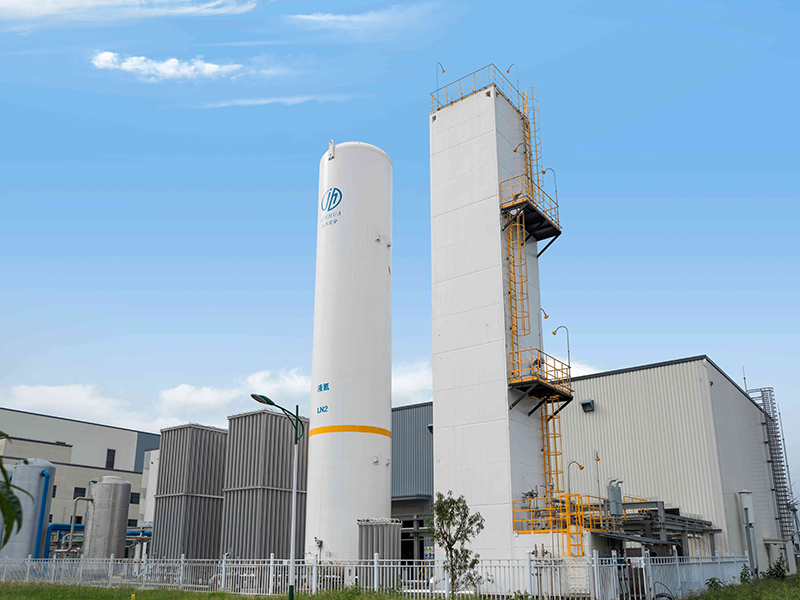
Regular energy audits help air separation plants identify power losses, improve compressor efficiency, and reduce operating costs. Operators should monitor electricity consumption, gas flow, system pressure, and equipment performance.
An energy audit establishes the baseline for compressor and air separation system efficiency.
Key inspection activities include:
Measuring compressor power consumption and gas flow.
Monitoring pressure drops across filters and piping.
Identifying air leaks using suitable detection equipment.
Comparing current performance with design specifications.
For industrial oxygen and nitrogen production, Jinhua Gas offers Advanced Cryogenic Air Separation Units with integrated compression, purification, and automated process control.
Air leaks increase energy consumption and reduce system efficiency.
Operators should inspect valves, flanges, connections, and instrument air lines. Ultrasonic detectors can help identify leaks that are difficult to detect during routine inspections.
Record each leak, prioritize repairs, and verify that the problem has been resolved.
Clean filters and effective moisture removal support stable compressor performance.
Replace filters according to differential pressure readings and manufacturer recommendations.
Where suitable, low-loss condensate drains can reduce unnecessary compressed air discharge. Condensate treatment must also meet applicable environmental requirements.
Variable Speed Drives (VSDs) can reduce energy consumption in suitable variable-load applications.
For aging compressors, improved impellers, inlet guide vanes, or other aerodynamic upgrades may increase efficiency.
However, the economic benefits depend on compressor type, operating profile, and equipment compatibility.
Investment decisions should balance initial equipment costs with long-term energy savings, maintenance, and reliability.
Capital expenditure (CAPEX) includes equipment purchase, installation, and commissioning.
Operating expenditure (OPEX) includes electricity, maintenance, labor, and other running costs.
A higher initial investment may be justified when efficiency improvements generate sufficient long-term savings.
Lifecycle Cost Analysis (LCC) considers the total cost of equipment ownership.
Important cost factors include:
Initial equipment investment.
Annual electricity consumption.
Maintenance and spare parts.
Expected service life.
Production losses caused by downtime.
Avoid assuming a fixed percentage for energy costs, as actual cost structures vary by plant.
Upgrade Option | Investment Level | Potential Benefit |
|---|---|---|
Air Leak Repair | Low | Reduced air losses |
Filter Replacement | Low | Lower pressure drop |
Compressor Maintenance | Low–Moderate | Improved operating efficiency |
VSD Installation | Moderate–High | Better part-load control |
Compressor Retrofit | High | Improved mechanical efficiency |
Complete ASU Replacement | Very High | Updated process design and capacity |
Actual savings and payback periods require project-specific calculations.
Retrofitting is appropriate when existing equipment remains reliable and technically suitable.
If major components are approaching the end of their service life, a new plant may provide better long-term value.
Explore Jinhua Gas's Air Separation Plant solutions for customized industrial oxygen, nitrogen, and argon production.
Compressor replacement or modification can interrupt gas production.
Schedule major work during planned shutdowns and assess backup gas supply requirements.
Temporary equipment should only be used when its pressure, cleanliness, control, and safety specifications are compatible with the existing system.
New compressors and control systems must integrate with existing plant equipment.
Check electrical requirements, operating pressure, flow capacity, and communication interfaces.
Changes to compressor operation may also affect purification and cryogenic separation performance.
System modifications must not compromise product purity or plant safety.
Before commissioning, verify process controls, approved materials, leak-tightness, and applicable oxygen-service requirements.
Changes affecting downstream equipment should undergo engineering review and appropriate testing.
Equipment upgrades require updated operating and maintenance procedures.
Operators should understand new control functions, safety alarms, inspection schedules, and equipment limitations.
Maintain accurate records of inspections, calibration, servicing, and operator training.
Risk | Recommended Control |
|---|---|
Production Downtime | Planned shutdown and backup supply |
Equipment Compatibility | Engineering review before installation |
Gas Purity Changes | Continuous monitoring and verification |
Control System Integration | Interface testing and commissioning |
Maintenance Requirements | Updated service procedures |
Operator Safety | Training and approved operating practices |
Successful ASU upgrades combine energy audits, equipment optimization, cost evaluation, and reliable maintenance.
For industrial gas projects, Jinhua Gas offers High-Performance Cryogenic Air Separation Plants for continuous oxygen and nitrogen production.
Contact Jinhua Gas to discuss plant capacity, energy consumption, gas purity, and equipment upgrade requirements.
Schedule a comprehensive baseline energy audit utilizing data loggers and ultrasonic leak detection to map your current thermodynamic reality.
Execute low-CAPEX, high-impact repairs immediately by fixing identified air leaks, replacing saturated intake filters, and installing zero-loss condensate drains.
Analyze your actual flow demand against installed capacity to determine if right-sizing, VSD retrofits, or impeller upgrades are mechanically viable.
Calculate the Lifecycle Cost (LCC) of your existing setup versus a modernized system to justify capital expenditure to the financial board.
A: The most common causes include undetected compressed air leaks, severe pressure drops from restrictive piping and fouled filtration, unmanaged condensate buildup, and operating oversized compressors at partial loads where aerodynamic efficiency plummets.
A: Following the general rule of thumb, reducing the compressor discharge pressure by 1 bar (approximately 14.5 psi) yields between 7% and 9% in energy savings, depending on the specific compressor type and ambient conditions.
A: It is a diagnostic process that involves installing temporary sensors to log flow, power consumption, and system pressure over time. This data identifies piping bottlenecks, locates leaks via ultrasonic detection, and calculates the exact ROI of potential upgrades.
A: No. VSDs are ideal for trim compressors managing fluctuating demands. They do not offer significant ROI for baseload compressors running continuously at 100% capacity, as the internal electrical losses of the drive will actually increase total power consumption.
A: Industry standards dictate inspecting drains weekly, oil separators every 2,000 to 4,000 hours, and intercoolers quarterly. Fouled cooling and separation components introduce massive thermodynamic penalties and dangerous pressure drops.
A: You calculate LCC by adding the initial CAPEX, total energy costs (Energy Consumption x Operating Hours x Electricity Rate), projected maintenance costs, and estimated downtime costs over the machine's expected 10-to-15-year operational lifespan.


