
Views: 0 Author: Site Editor Publish Time: 2026-09-24 Origin: Site


Bringing a cryogenic plant online is a high-stakes operation. Minor deviations in temperature or pressure can lead to severe equipment damage, safety hazards, or extended off-spec production. Plant operators must balance the need for rapid time-to-purity to minimize energy waste with the strict thermal stress limitations of cryogenic equipment. Manual, poorly documented start-ups lead to unpredictable commissioning timelines, increased operational expenditure, and potential supply chain disruptions. Establishing a standardized, highly controlled Air Separation Unit Start-up Procedure ensures safety, achieves target product purities efficiently, and protects capital assets. Facilities often support these procedures with Advanced Process Control, digital twins, and expert commissioning partners. A precise approach prevents thermal shock, stabilizes distillation columns faster, and transitions the plant from startup venting to on-spec production with minimal utility waste.
Preparation is Non-Negotiable: Rigorous pre-start-up checks, including system purging, leak testing, and instrumentation calibration, dictate the success of the entire cooldown and liquefaction process.
Thermal Management is Critical: The cooldown phase must adhere strictly to manufacturer-specified temperature gradients to prevent catastrophic piping stress and cold box structural failures.
Automation Drives Efficiency: Transitioning from manual sequencing to automated start-up procedures significantly reduces time-to-purity and minimizes the energy penalty incurred during the start-up phase.
Supply Continuity: Seamless integration with liquid backup systems (vaporizers) is essential to maintain pipeline pressure and customer supply while the main plant achieves specification.
Expertise Mitigates Risk: Partnering with specialized commissioning engineers or control system integrators ensures that transient instabilities (e.g., compressor surge, column flooding) are managed without halting the start-up sequence.
Table of Contents
Executing a flawless start-up requires exhaustive preparation. You cannot rush the pre-requisite phase without risking severe mechanical failures or process contamination. Operators must verify every subsystem before introducing feed air into the cryogenic sections.
Before start-up, operators should set clear limits for cooling rate, equipment vibration, moisture, and CO₂ levels. The typical cooldown rate is 30–50°C per hour, depending on the heat exchanger design. Clear alarm and shutdown limits should also be set before starting compressors or cooling the cold box.
ASU start-up should follow CGA and relevant local safety requirements. Oxygen monitors should be calibrated to detect oxygen-rich or oxygen-deficient conditions during venting. High-pressure gas venting can also create significant noise, so silencers should be inspected and venting should meet local noise requirements.
Before cooldown, the cold box and piping should be purged with dry, warm gas to remove moisture, CO₂, and hydrocarbons that could freeze inside the system. Operators should check all piping areas and verify contaminant levels before cooling begins. A dew point of -60°C or lower is normally required, and pressure testing can help confirm that the main heat exchanger has no internal leaks.
Accurate instruments and responsive control valves are essential for a safe start-up. Operators should test Joule-Thomson valves, compressor anti-surge valves, temperature transmitters, pressure instruments, and gas analyzers before cooldown. Incorrect readings or slow valve response can cause unstable operation or excessive thermal stress.
Before start-up, check the MAC, BAC, cryogenic pumps, lubrication systems, seal gas pressure, and cooling water flow. The DCC or ACU should provide enough pre-cooling before air enters the purification system. Operators should also verify MAC inlet guide vane (IGV) calibration and intercooler drains to reduce the risk of compressor surge, water carryover, and impeller damage.
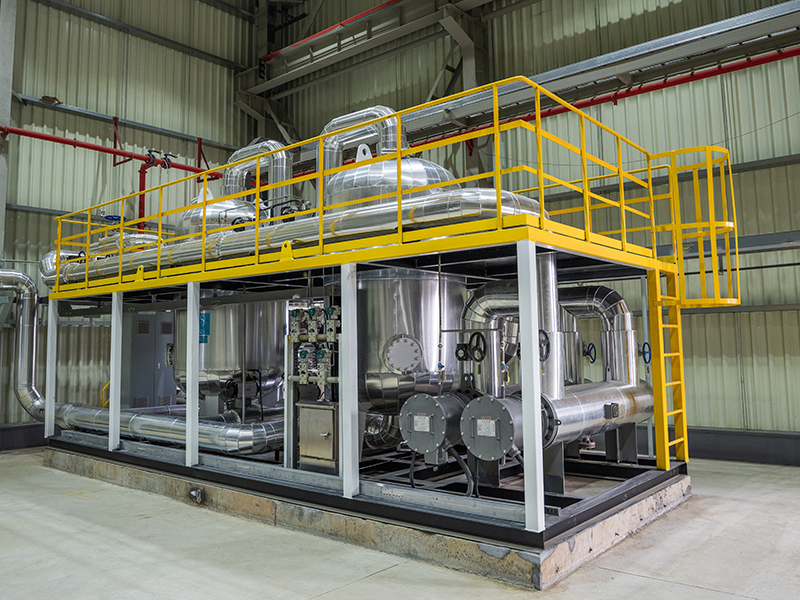
The core of commissioning involves a highly structured, phased approach. Each phase must reach a stable steady-state before operators initiate the next sequence. Rushing these transitions causes process instability and extends the overall time-to-purity.
Start the Main Air Compressor (MAC) and establish stable airflow while monitoring vibration. The air then passes through the DCC or ACU for cooling and moisture removal before entering the PPU. The PPU removes remaining moisture, CO₂, and hydrocarbons to protect the cold box from freezing and contamination.
Once clean and dry air is available, start the expansion turbine to cool the cold box and cryogenic equipment. The temperature should decrease gradually to protect aluminum heat exchangers and piping from thermal stress. Operators should closely monitor temperature changes and stay within the manufacturer's recommended cooling limits.
As the cold box reaches cryogenic temperatures, liquid air begins to form in the high-pressure and low-pressure columns. Operators should control liquid levels, airflow, reflux ratios, and pressure differences to prevent flooding or unstable operation. Liquid air is then transferred through the Joule-Thomson valve to support further cooling and liquid accumulation.
Once enough liquid has accumulated, the process shifts to producing on-spec oxygen, nitrogen, and argon. Operators adjust product flows using real-time analyzer data until the required purity is reached. The plant can then stop venting off-spec gas and gradually switch from backup supply to normal storage tanks or pipeline delivery.
Key start-up checks:
Confirm compressor discharge valves are correctly positioned.
Check that the PPU regeneration system is operating normally.
Establish minimum flow before increasing expansion turbine speed.
Monitor main heat exchanger differential pressure during liquid formation.
Verify product purity before sending gas to storage or pipelines.
Not all start-ups are identical. The thermal state of the cold box dictates the specific sequence of operations, the required duration, and the associated risk profile. Operators correctly identify the plant's condition to select the appropriate start-up protocol.
A warm start is executed when the cold box is at ambient temperature. This typically occurs after a major maintenance turnaround, a prolonged outage, or initial plant commissioning. The warm start requires the full, prolonged deriming and cooldown sequence. Because the equipment is warm, operators strictly enforce thermal gradient limits to avoid thermal shock. This procedure is time-intensive. It often takes several days to achieve full product purity, as the entire mass of the cold box internals must be systematically cooled to cryogenic temperatures.
A cold start is executed after a brief planned shutdown where cryogenic temperatures and liquid inventory have been maintained inside the insulated cold box. Because the equipment is already cold, the deriming and extended cooldown phases are bypassed. The focus shifts to rapid compressor restart, re-establishing vapor-liquid equilibrium in the distillation columns, and minimizing venting time. A cold start is significantly faster than a warm start. It often returns the plant to on-spec production within a few hours. Operators still carefully manage the re-introduction of airflow to prevent sudden pressure surges that could upset the column inventory.
Trip recovery involves immediate actions required following an unexpected shutdown, such as a sudden power failure or a critical equipment trip. The primary goal during a trip is to safely bottle up the plant. Operators isolate the cold box to retain liquid inventory and maintain cryogenic temperatures for as long as possible. Automated shutdown logic usually handles the immediate isolation, but operators verify valve positions. Once the underlying fault is cleared, the plant undergoes an expedited restart. The specific recovery steps depend on how much temperature was lost and how much liquid inventory boiled off during the downtime.
The control strategy utilized during commissioning heavily influences the efficiency, safety, and speed of the start-up. While manual operations were historically the standard, modern facilities increasingly rely on advanced automation.

Manual start-ups suffer from a high dependency on operator experience and tribal knowledge. When operators manually adjust JT valves, expander guide vanes, and compressor setpoints, the plant's response is subject to human reaction times. This approach increases the risk of human error. It can lead to equipment trips, column flooding, or extended flaring and venting times. Manual operations often result in conservative, overly slow cooldown rates as operators err on the side of caution. This wastes significant electrical power running compressors without producing on-spec product.
Modern plants utilize state-based control logic to automate the transition between start-up phases. Advanced Process Control (APC) systems continuously monitor hundreds of process variables, adjusting valve positions and compressor loads in real-time. This dynamic optimization during transient states ensures the plant operates exactly at the edge of its mechanical and thermal limits without exceeding them. Automated sequences execute complex, multi-variable adjustments simultaneously. This precision drastically reduces the time required to reach steady-state operations.
Leading facilities utilize digital twins and predictive modeling software to map the optimal start-up trajectory before executing it on the live plant. A digital twin simulates the thermodynamic and fluid dynamic behavior of the specific Air Separation Unit. Operators test various start-up scenarios in a virtual environment, identifying potential bottlenecks or surge conditions. This simulation data refines the DCS automation logic, ensuring the actual start-up is efficient and safe.
The shift to automation provides measurable operational benefits. Linking automated cooldown controls directly correlates to reduced thermal fatigue on brazed aluminum heat exchangers. This extends asset life and reduces maintenance costs. Automated purity control minimizes the time spent venting off-spec gas. This directly links to reduced energy consumption, measured in kilowatts per ton of product, during the start-up window. Faster time-to-purity means the plant begins generating revenue sooner, offsetting the massive power draw of the main air compressors.
Evaluation Metric | Manual Sequencing | Automated Sequencing (APC) |
|---|---|---|
Time-to-Purity | Highly variable; depends on operator experience. Generally slower. | Consistently faster; optimized for rapid stabilization. |
Risk of Human Error | High; prone to over-correction or missed alarms during transient states. | Low; relies on deterministic logic and continuous multi-variable monitoring. |
Thermal Stress Control | Reactive; operators adjust valves after temperature gradients spike. | Proactive; system anticipates gradients and modulates flow smoothly. |
Energy Efficiency | Poor; extended venting times lead to high kW/ton during start-up. | Excellent; minimizes off-spec venting and optimizes compressor load. |
Dependency on Tribal Knowledge | High; requires senior operators with specific plant history. | Low; best practices are codified into the DCS logic. |
Start-up is the most volatile period of plant operation. Understanding the inherent risks and implementing robust mitigation strategies protects personnel and equipment.
The most significant mechanical risk during a warm start is rapid cooling. Introducing cold gas too quickly causes severe thermal contraction. This can lead to leaks at flanged joints or the internal rupture of aluminum plate-fin heat exchangers. To mitigate this risk, facilities implement strict rate-of-change alarms within the Distributed Control System (DCS). Operators utilize automated bypass valves to precisely control the flow of cold gas. This ensures the temperature drop remains within the safe limits specified by the equipment manufacturer.
Moisture or CO₂ passing through the PPU can freeze inside the cryogenic system and block the main heat exchanger. Operators should monitor PPU performance and differential pressure (dP), follow proper deriming procedures before start-up, and use alarms to detect flow restrictions early.
Pressure and flow changes during start-up can cause compressor surge or unstable expander operation. Anti-surge controls, DCS recycle valves, and variable speed drives (VSDs) help maintain stable flow. Operators should also monitor turbine vibration, seal gas pressure, and lube oil conditions to reduce the risk of equipment trips or bearing damage.
During start-up, off-spec gas must often be vented before it can enter the product pipeline. This can create high noise levels and waste gas. Properly sized silencers can reduce venting noise, while automated start-up sequences can shorten venting time and reduce gas losses.
Executing a safe and efficient start-up often requires external expertise. This is especially true when upgrading control systems or commissioning a newly built facility. Selecting the right vendor is a major project decision.
When evaluating third-party commissioning services, you assess their specific engineering expertise. The vendor must demonstrate a proven track record with your specific plant topology. Commissioning a gaseous oxygen plant is fundamentally different from commissioning a high-purity liquid plant with complex argon recovery columns. You demand case studies and reference projects that match your facility's exact technical specifications. This ensures the vendor understands the unique thermodynamic challenges of your process.
If you upgrade to automated start-up sequencing, the chosen automation platform must integrate seamlessly with your existing DCS or PLC architectures. Proprietary, closed-loop systems create integration bottlenecks. You ensure the vendor's solution is scalable. This allows for future plant expansions or the addition of new product lines. The control system utilizes open communication protocols and provides transparent logic. Your internal engineering team can troubleshoot and maintain this logic long after the vendor leaves the site.
A successful commissioning project does not end when the plant reaches steady-state. You evaluate vendors based on their provision of ongoing support. High-fidelity operator training simulators (OTS) are invaluable tools. An OTS allows your operators to practice warm starts, cold starts, and trip recoveries in a safe, virtual environment before touching the live plant. You ensure the vendor provides robust post-start-up technical support. This includes remote diagnostics and rapid response times for control system troubleshooting.
Conduct a comprehensive audit of your current start-up Standard Operating Procedures (SOPs) to identify manual bottlenecks and safety gaps.
Evaluate historical time-to-purity data and energy consumption metrics to quantify the financial cost of your current start-up delays.
Consult with a specialized control systems integrator to identify specific automation opportunities, focusing on APC and automated cooldown sequencing.
Implement high-fidelity operator training simulators to ensure your team can execute complex trip recoveries and cold starts flawlessly.
A: Depending on the size of the plant and whether it is a warm start or a cold start, achieving full product purity takes anywhere from 12 hours to several days. Cold starts are significantly faster, often taking just a few hours. Warm starts require extensive deriming and controlled cooldown phases.
A: A warm start occurs when the cold box is at ambient temperature, requiring a full, slow cooldown to prevent thermal shock. A cold start occurs after a brief shutdown where cryogenic temperatures and liquid inventory have been maintained, allowing for a much faster return to production.
A: The PPU removes moisture, carbon dioxide, and trace hydrocarbons from the feed air. If these contaminants enter the cryogenic section, they freeze, block the narrow passages of the main heat exchangers, and force an immediate plant shutdown.
A: The maximum allowable cooldown rate depends on the specific manufacturer's guidelines for the brazed aluminum heat exchangers. Typically, this rate is strictly limited to between 30°C and 50°C per hour to prevent uneven thermal contraction and internal structural damage.
A: Compressor surge is prevented by utilizing highly responsive anti-surge control loops within the DCS. These loops monitor flow and pressure, rapidly opening recycle valves to maintain minimum flow requirements through the compressor during the fluctuating conditions of start-up.
A: The expansion turbine generates the primary refrigeration required to cool the plant. By expanding high-pressure air isentropically, the turbine drops the air temperature significantly. This is essential for bringing the cold box down to cryogenic liquefaction temperatures.
A: Yes, modern facilities utilize Advanced Process Control (APC) to fully automate the sequence. State-based logic controls valve positions, compressor loads, and cooling rates, transitioning the plant through each phase faster and more safely than manual operation.


