
Views: 0 Author: Site Editor Publish Time: 2026-04-17 Origin: Site


Food processors do not care about process theory for its own sake. What matters to them is whether shrimp keeps a firm bite after thawing, whether berries hold their shape, whether prepared meals look consistent on the line, and whether freezing can keep up with production targets. That is where cryogenic liquid nitrogen production equipment becomes important. It converts ordinary air into a practical low-temperature resource for freezing and preservation, helping food plants improve product quality, reduce inconsistency, and keep production moving with fewer interruptions. For companies looking for a reliable food freezing solution, JINHUA GAS provides systems designed to connect gas production with real processing requirements.
A liquid nitrogen plant starts with air. Because nitrogen already makes up a large part of the atmosphere, the system uses this accessible raw material as the beginning of the production process. That makes the workflow much easier to understand. The plant is not creating nitrogen from nothing. It is separating and converting what is already available into a form that can serve industrial food processing.
For food processors, this matters because the system turns a common natural resource into a valuable cryogenic medium. Once air enters the plant, it moves through several controlled stages until it becomes liquid nitrogen ready for freezing and preservation tasks. That path from raw air to usable cryogenic liquid is the foundation of the whole process.
This first step also helps explain why the technology fits food factories so well. Whether a plant handles seafood, meat products, frozen fruit, bakery items, or ready meals, the production goal is similar: build a stable source of liquid nitrogen that supports product quality and keeps the line running smoothly.
Before nitrogen can be separated and liquefied, the incoming air has to be prepared. The first major step is compression. Air is drawn into the system and pressurized so it can move through the following stages under controlled conditions. Without that controlled operating basis, the rest of the process would not work efficiently.
After compression, the air is cleaned. This is essential because untreated air contains moisture and impurities that can interfere with cryogenic operation. In a food processing environment, this is not a minor technical detail. Any instability in the early stages of production can affect the quality and reliability of the final liquid nitrogen supply.
From the processor’s point of view, the benefit is simple. Proper air preparation supports smoother plant performance later on. A food factory does not want a nitrogen source that is only impressive in specifications. It needs a system that can operate steadily through normal daily production, especially when freezing is tied directly to product quality and delivery schedules.
Pretreatment may not be the most visible part of the plant, but it is one of the most important. When the incoming air is properly conditioned, the downstream stages become easier to control. Separation becomes more stable, liquefaction becomes more reliable, and the supply reaching the food line becomes more dependable.
That matters because freezing results depend on consistency. If the system starts with stable input, it is better positioned to deliver steady cryogenic performance later. In food production, where one unstable stage can affect the whole line, this connection has real value.
JINHUA GAS develops its systems with that complete process logic in mind. The aim is not only to produce nitrogen, but to keep the full working chain suitable for industrial food applications where preservation quality and operational stability both matter.
Once the air has been compressed and cleaned, the plant moves into its core stage: separation and liquefaction. This is the heart of how liquid nitrogen is produced for food processing use.
The prepared air enters a cryogenic separation process where nitrogen is isolated from oxygen and other gases. In simple terms, the system creates the right low-temperature conditions to separate out the nitrogen needed for industrial application. That isolated nitrogen is then cooled further until it changes into liquid form.
This final step is what makes the gas suitable for food freezing. Nitrogen in gas form is useful in many industries, but liquid nitrogen provides the intense cooling effect required for rapid freezing and preservation tasks. For food processors, this is the stage where the process becomes truly practical. The system is no longer just handling air. It is producing a cold resource that can directly support product quality on the factory floor.
The separation and liquefaction sequence also shows why the process is so valuable. It turns a widely available input into a specialized output that helps food manufacturers freeze more effectively, protect texture and appearance, and support more stable processing conditions.
Process step | What happens | Why it matters in food processing |
Air intake | Atmospheric air enters the system | Production starts from an available raw material |
Pretreatment | Air is compressed and cleaned | Stable input supports stable performance |
Separation | Nitrogen is isolated | Usable nitrogen is created for industrial use |
Liquefaction | Nitrogen becomes liquid | The product is ready for freezing use |
Delivery | Liquid nitrogen moves to the line | Production connects directly to food applications |
Seen as one connected path, the process becomes easy to follow. Air enters the plant, is prepared for cryogenic treatment, becomes liquid nitrogen, and then moves toward actual food production use. That sequence is what makes a food freezing nitrogen system so practical for processors that need both quality and line efficiency.
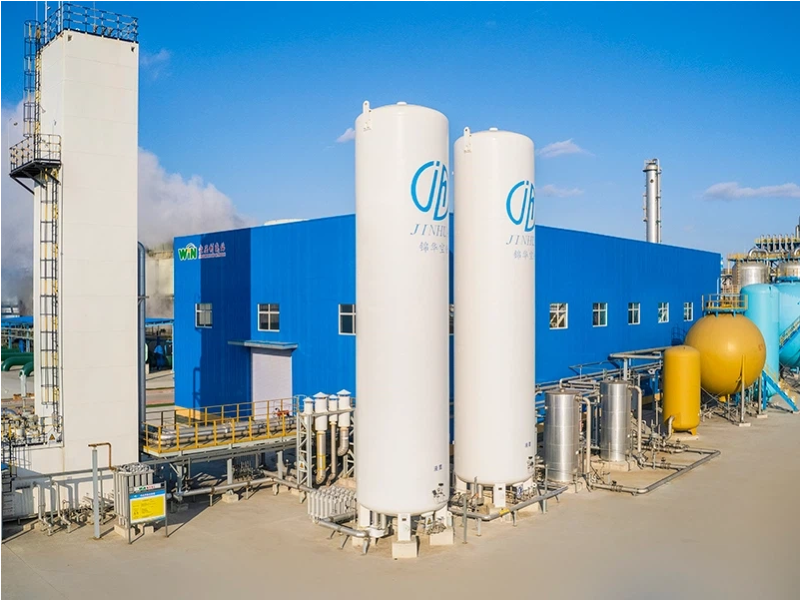
After liquefaction, the nitrogen must be stored correctly before it is used. That is why the working process does not end when the nitrogen becomes liquid. A complete plant includes insulated storage that keeps the supply available for production demand.
For food processors, storage adds flexibility. The line does not always consume nitrogen at the same moment it is produced, so a stable storage section helps bridge production timing and real application needs. It also supports continuity across different shifts, output levels, and production schedules.
This is especially useful in food plants where freezing is part of a larger coordinated workflow. A stable storage section helps prevent unnecessary disruptions and makes it easier to maintain consistent freezing support throughout the day.
Once stored, the liquid nitrogen must be transferred to the point of use. This step connects the plant directly to the food processing line. Depending on the factory layout, liquid nitrogen may be sent to freezing tunnels, cooling sections, chambers, or preservation-related process points.
This is where the system becomes easiest to picture in practice. The nitrogen produced by the plant is no longer just a cryogenic product in storage. It becomes an active part of the production line, helping freeze seafood, cool bakery products, preserve fruit, or support ready-meal processing.
A strong transfer stage is important because it ensures that cryogenic production does not stay separate from actual manufacturing needs. JINHUA GAS develops systems with this practical integration in mind, allowing processors to connect nitrogen production, storage, and end use more smoothly.
Cryogenic equipment may sound complex, but modern automation makes day-to-day operation far easier to manage than many people expect. A well-designed system uses controls to support stable performance from air intake through nitrogen delivery.
For food processors, this means more repeatable operation and less uncertainty during production. Freezing schedules are easier to maintain when the nitrogen supply is controlled in a more consistent way. As output increases, automation becomes even more useful because it helps the plant function as a dependable production asset rather than a difficult background utility.
Automation also improves coordination between the production unit and the food line. When process conditions can be managed more accurately, the plant is better able to support stable freezing results across shifts and batches.
Reliable operation also depends on monitoring and safety discipline. Monitoring helps operators understand how the system is performing and notice changes before they grow into larger interruptions. Safety routines support long-term plant performance and help the equipment fit the standards expected in serious food manufacturing environments.
This matters because a liquid nitrogen plant should do more than produce cold efficiently. It should also support uptime, confidence, and steady line performance. JINHUA GAS builds its cryogenic systems around that practical requirement, combining process integration, insulated storage, automation, and technical support for industrial users who need dependable operation over time.
A liquid nitrogen plant works through a clear path: air enters the system, is compressed and cleaned, nitrogen is separated and liquefied, and the finished product is stored and delivered to the food line for freezing and preservation. That is how cryogenic liquid nitrogen production equipment helps food processors improve quality control, maintain stable freezing performance, and support smoother factory operation. With JINHUA GAS, this process becomes part of a practical industrial solution designed for real food applications and dependable line integration. If you are planning to upgrade freezing and preservation performance, contact us to learn more about the right Liquid Nitrogen Plant for Food Freezing and Preservation for your production needs.
Liquid nitrogen is produced by taking in air, compressing and cleaning it, separating nitrogen from other gases, and cooling it until it becomes liquid. The liquid is then stored and delivered to the food processing line.
Pretreatment removes moisture and impurities that can affect cryogenic performance. Cleaner input helps the downstream process stay more stable and supports a more reliable liquid nitrogen supply.
After liquefaction, liquid nitrogen is kept in insulated storage and then transferred to freezing tunnels, cooling areas, or other preservation points depending on the plant layout.
Stable performance depends on proper pretreatment, reliable separation and liquefaction, insulated storage, efficient transfer, automation, and routine monitoring that helps reduce avoidable downtime.


