
Views: 0 Author: Site Editor Publish Time: 2026-07-21 Origin: Site


High-volume steel production requires a continuous, reliable supply of industrial gases. On-site generation acts as a critical infrastructure investment rather than a simple procurement choice. Relying on merchant liquid gas deliveries exposes steel plants to supply chain volatility, high transportation costs, and supply shortages. Conversely, selecting the wrong on-site generation system leads to excessive energy consumption, inadequate peak-load capacity, or costly production bottlenecks.
To transition from external reliance to captive generation, plant operators must evaluate on-site systems based on metallurgical requirements, energy efficiency, and lifecycle costs. This guide provides a framework for specifying, evaluating, and selecting an air separation unit tailored to integrated and mini-mill steel operations.
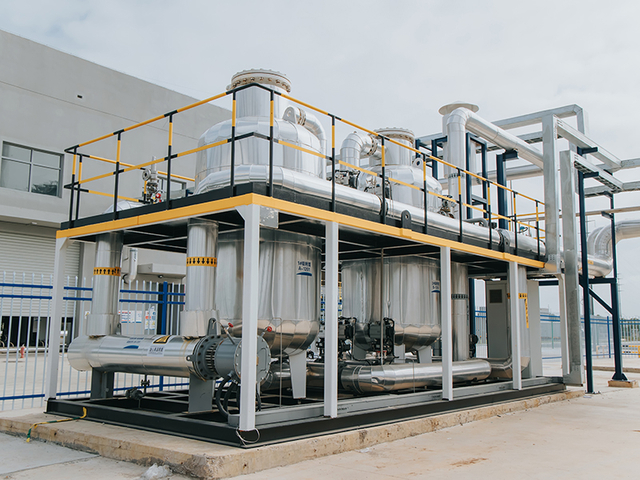
Technology Matching: Cryogenic distillation remains the industry standard for steel plants requiring high-purity oxygen (>99.5%) and argon recovery, while VPSA may suffice for specific EAF (Electric Arc Furnace) operations with lower purity thresholds.
Energy Economics: The specific power consumption (kWh/Nm³) of the unit is the primary driver of OPEX; evaluating the trade-off between upfront CAPEX for high-efficiency compressors and long-term energy costs is mandatory.
Load Flexibility: Steelmaking demand fluctuates. The selected unit must demonstrate efficient turndown capabilities and integrate with liquid backup systems to handle peak blowing periods without venting excess gas.
Argon Economics: For plants utilizing secondary metallurgy (e.g., ladle furnaces), the ability to co-produce high-purity argon can significantly offset overall operating expenses.
Environmental Resilience: Dusty steel mill environments necessitate advanced pre-purification units (PPU) and multi-stage self-cleaning air filtration systems to protect the air separation unit from contaminants and safety hazards.
Table of Contents
An air separation unit must deliver precise volumes of oxygen, nitrogen, and argon at specific pressures without interrupting the metallurgical process. The success of the installation depends on matching the output profile to the exact requirements of the furnaces and secondary processes. Steel mills operate continuously, and any disruption in gas supply immediately halts production, leading to severe financial losses and potential equipment damage.
Basic Oxygen Furnaces (BOF) demand massive volumes of high-purity oxygen for carbon decarburization. During the blowing phase, oxygen is injected at supersonic speeds through a water-cooled lance. Purity levels exceeding 99.5% are mandatory to prevent nitrogen pickup in the steel melt, which causes embrittlement. A typical BOF requires 50 to 60 normal cubic meters of oxygen per ton of liquid steel produced.
Electric Arc Furnaces (EAF) utilize oxygen for burner enrichment, carbon lancing, and post-combustion. Injecting oxygen accelerates scrap melting and reduces electrical energy consumption. EAF operations generally require 30 to 40 normal cubic meters of oxygen per ton of steel. Blast furnaces require a continuous baseline flow of oxygen for air enrichment. Adding oxygen to the hot blast increases the flame temperature at the tuyeres, boosting production rates and reducing pulverized coal or coke consumption.
Furnace Type | Primary Gas Application | Typical Purity Requirement | Flow Characteristic |
|---|---|---|---|
Basic Oxygen Furnace (BOF) | Decarburization via lance | >99.5% Oxygen | Highly cyclical, massive peak flows |
Electric Arc Furnace (EAF) | Burner enrichment, lancing | 90% - 99.5% Oxygen | Variable, batch-dependent |
Blast Furnace (BF) | Hot blast enrichment | >95% Oxygen | Continuous, steady baseline |
Nitrogen serves multiple utility and metallurgical functions across the plant. Operators use it for bottom stirring in the BOF, purging gas lines, tuyere cooling, and blanketing storage silos. High-pressure nitrogen is also used for slag splashing to extend the refractory life of the furnace.
Argon is mandatory for Argon Oxygen Decarburization (AOD) in stainless steel production and ladle stirring in secondary metallurgy. Injecting argon into the ladle homogenizes the melt temperature and floats non-metallic inclusions to the slag layer. Captive argon generation offers high financial value. Purchasing merchant liquid argon requires heavy logistical coordination and exposes the plant to regional supply shortages.
The push toward green steelmaking alters gas demand profiles significantly. Direct Reduced Iron (DRI) plants using natural gas or hydrogen rely heavily on oxygen and nitrogen. Operators must evaluate gas volume requirements for hydrogen-based DRI synthesis gas generation and reduction loop blanketing. As mills transition from blast furnaces to DRI-EAF configurations, the sizing and output ratios of the on-site gas plant must adapt to these new metallurgical flowsheets.
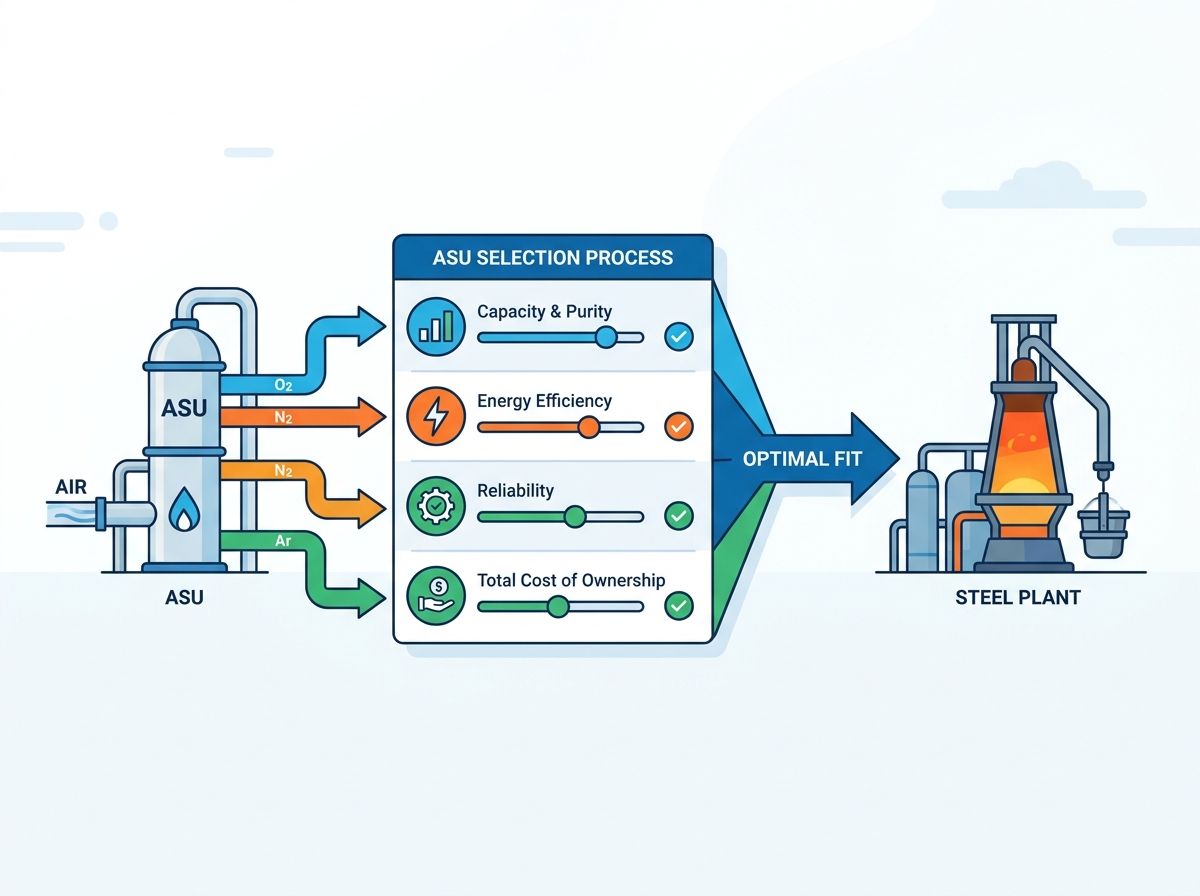
Selecting the right technology requires comparing the primary methods available for on-site generation. Operators must filter these options based on the specific scale, purity needs, and secondary gas requirements of their steel production facilities.
Cryogenic distillation utilizes low-temperature fractional distillation to separate air into its constituent components. Ambient air is compressed, cooled, purified, and then expanded to cryogenic temperatures (below -170°C). The liquefied air enters distillation columns where oxygen, nitrogen, and argon separate based on their different boiling points.
This technology is the default choice for integrated steel mills due to its high capacity, ability to achieve >99.5% oxygen purity, and capability to produce liquid reserves. Furthermore, argon recovery is only viable with cryogenic systems. The addition of an argon column allows the plant to extract high-purity argon from the oxygen-argon mixture in the low-pressure column, making it indispensable for plants utilizing secondary metallurgy.
Vacuum Pressure Swing Adsorption (VPSA) mechanics rely on molecular sieves to separate oxygen from nitrogen at near-ambient temperatures. A blower pushes air through a vessel containing zeolite, which adsorbs nitrogen, allowing oxygen to pass through. A vacuum pump then regenerates the sieve bed by drawing off the trapped nitrogen.
Mini-mills or specific EAFs where 90-93% oxygen purity is metallurgically acceptable often use VPSA systems. They offer faster startup times and lower initial capital requirements. However, these systems have strict limitations. They cannot produce argon, lack liquid backup generation capabilities, and face lower scalability limits compared to cryogenic plants. If an EAF requires high-purity oxygen for specific steel grades, a VPSA will not suffice.
Parameter | Cryogenic Distillation | VPSA Technology |
|---|---|---|
Oxygen Purity | Up to 99.9% | 90% - 93% |
Argon Recovery | Yes (High Purity) | No |
Liquid Production | Yes (LOX, LIN, LAR) | No |
Startup Time | 24 to 48 hours | Minutes to hours |
Best Fit | Integrated Mills, BOF, Large EAF | Small Mini-mills, Basic EAF |
Translating technical specifications into operational reliability and cost savings requires rigorous engineering analysis. Plant operators must evaluate several dimensions to ensure the selected unit meets operational demands without inflating utility budgets.
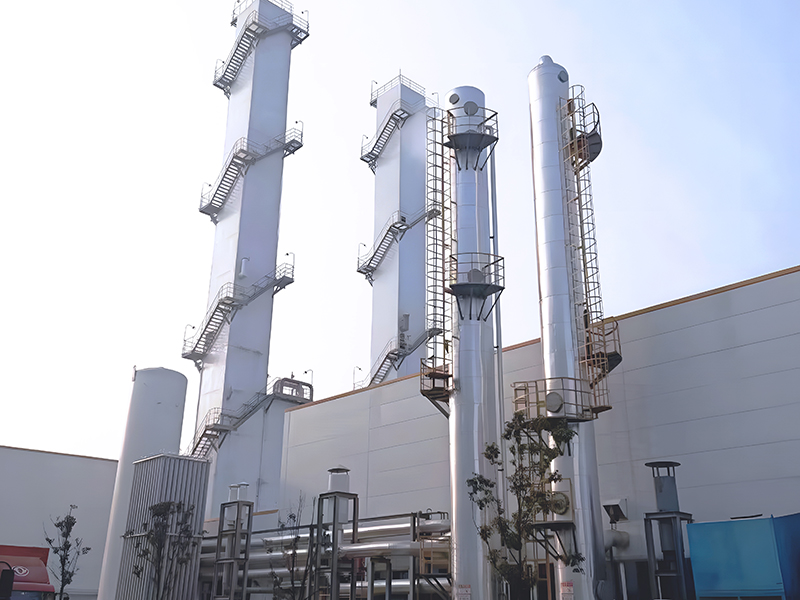
Calculating baseline demand versus peak demand is necessary, especially during BOF blowing periods. A BOF operates in batches, requiring massive oxygen flows for 15 to 20 minutes, followed by periods of zero demand during tapping and charging. The gas plant must handle this cyclical load. Typically, the plant produces at a steady rate, filling high-pressure gaseous buffer vessels or utilizing liquid oxygen vaporization to meet the peak flow.
Evaluating the turndown ratio is equally important. Operators must determine how efficiently the unit operates at 70% or 50% capacity during plant maintenance, relining, or market downturns. Advanced cryogenic plants can turn down to 60% of their nominal capacity while maintaining acceptable specific power metrics.
Specifying 99.9% oxygen when 99.5% is sufficient incurs exponential energy costs. Higher purity requires more reflux in the distillation columns, demanding higher air flow and more compression power. Operators must balance purity requirements with oxygen recovery rates (yield) from the incoming air stream to optimize efficiency. Over-specifying purity is a common engineering error that permanently inflates operating expenses.
Analyzing the main air compressor (MAC) and booster air compressor (BAC) efficiencies is critical. Compression accounts for over 70% of the plant's energy consumption. Operators benchmark specific power, measured in kWh per normal cubic meter of gas produced. Centrifugal compressors with advanced aerodynamic impellers and interstage cooling provide the best efficiency.
Integration with plant power grids and evaluating variable frequency drives (VFDs) for load matching further enhance energy efficiency. VFDs allow the compressors to adjust their speed based on the actual air demand, preventing energy waste associated with inlet guide vane throttling or venting.
Managing heavy particulate loads, such as blast furnace dust and raw material handling dust, requires multi-stage self-cleaning inlet air filters. Steel mill air is highly contaminated. If dust bypasses the filters, it erodes compressor impellers and fouls heat exchangers.
The Pre-purification Unit (PPU) design must effectively adsorb moisture, carbon dioxide, and trace hydrocarbons like acetylene. If hydrocarbons pass through the PPU, they accumulate in the liquid oxygen bath of the main condenser. This creates a severe explosion hazard. Robust PPU vessels utilizing activated alumina and molecular sieves are non-negotiable in a steel mill environment.
Cooling water infrastructure must meet specific flow rate, temperature limits, and water quality requirements for compressor intercoolers. Poor water quality leads to scaling in the heat exchangers, increasing the air temperature entering the molecular sieves and degrading their adsorption capacity.
Electrical substation requirements include voltage stability and protection against voltage dips. A voltage sag caused by an EAF striking an arc can trip the main air compressor, shutting down the entire gas plant. Dedicated feeders and robust switchgear are required to isolate the gas plant from the mill's electrical noise.

Moving beyond the initial purchase price to a 15-to-20-year lifecycle analysis ensures the plant remains economically viable. The initial capital expenditure is only a fraction of the total financial commitment.
High-efficiency structured packing in the distillation columns and advanced centrifugal compression increase the initial capital expenditure but drastically reduce the 20-year operating expenses. Operators must evaluate the cost of capital against projected local energy tariffs. In regions with high electricity costs, investing in a highly efficient, low-pressure drop plant yields a rapid return on investment.
Sizing the plant to produce 2-5% liquid products (Liquid Oxygen, Liquid Nitrogen, Liquid Argon) provides operational flexibility. This liquid serves as internal backup storage, filling the cryogenic tanks used during maintenance outages. Alternatively, plants can sell surplus liquid to the local merchant market. This revenue stream can subsidize the electrical operating costs of the facility.
Financial modeling dictates the execution strategy. Purchasing the plant outright under an Engineering, Procurement, and Construction (EPC) contract requires internal maintenance expertise and places the operational risk on the steelmaker. Conversely, contracting an industrial gas company for an over-the-fence gas supply agreement (BOO model) shifts the operational risk and maintenance burden to the gas supplier. Operators must analyze risk allocation, balance sheet impact, and performance guarantees under both models.
Addressing the physical and operational risks of installing a massive cryogenic plant on an active steel site is essential for a successful project execution. Site integration requires coordination between civil, mechanical, and electrical engineering teams.
Space requirements for the cold box, compressor house, PPU vessels, and cooling water towers dictate the site layout. The cold box, housing the distillation columns, can exceed 40 meters in height, requiring deep foundation piling. Proximity to the furnace impacts piping infrastructure costs and pressure drop management. Locating the plant too far from the BOF requires larger diameter pipelines to maintain the required delivery pressure.
A furnace shutdown due to gas starvation carries immense financial costs. Sizing liquid backup storage tanks and steam or water-bath vaporizers is critical to sustain operations during maintenance or unplanned trips. The backup system must automatically activate upon a pressure drop in the main supply header, ensuring the furnace never loses oxygen flow during a blow.
Implementing automated hydrocarbon monitoring in the liquid oxygen evaporator prevents explosions. Continuous analyzers monitor for acetylene and other combustible gases. Acoustic hoods and silencers ensure compliance with local noise regulations for massive compressors. Oxygen safety protocols, including specialized cleaning for oxygen service and nitrogen asphyxiation prevention systems, protect personnel working in confined spaces.
Integration with the steel plant's central Distributed Control System (DCS) and SCADA networks streamlines operations. Advanced Process Control (APC) enables predictive load tracking. By receiving signals from the steel mill's production schedule, the APC can ramp up the gas plant's production minutes before a BOF blow begins, enabling dynamic, operator-free turndown and maximizing energy efficiency.
Selecting the right air separation unit is not only about meeting current steel production requirements but also about improving long-term efficiency, operational reliability, and energy performance. A carefully selected ASU can reduce operating costs while ensuring a stable supply of industrial gases for every stage of steelmaking.
At Zhejiang Jinhua, we provide advanced industrial gas equipment and customized air separation solutions for steel plants and other heavy industries worldwide. Our engineering expertise and energy-efficient technologies help customers achieve reliable gas production, lower operating costs, and long-term operational success.
Before investing in an air separation unit, compare suppliers based on energy efficiency, lifecycle costs, operational flexibility, and technical support—not just the initial purchase price.
A: A well-maintained cryogenic unit typically operates for 15 to 25 years. Routine maintenance of compressors, pre-purification units, and control systems ensures longevity and sustained efficiency throughout the plant's lifecycle.
A: Energy consumption depends heavily on the specific power of the compressors and the required product purity. It generally ranges from 0.4 to 0.7 kWh per normal cubic meter of oxygen produced, representing a significant portion of operating costs.
A: VPSA systems can replace cryogenic units only in specific applications, such as mini-mills or EAFs, where oxygen purity requirements are lower (90-93%). They cannot produce argon or liquid reserves.
A: Argon is essential for secondary metallurgy processes like Argon Oxygen Decarburization (AOD) and ladle stirring. Captive argon recovery eliminates the need to purchase expensive merchant liquid argon, significantly improving operational economics.
A: Plants manage fluctuations by utilizing units with efficient turndown capabilities and integrating liquid backup storage systems. During peak demand, vaporizers convert stored liquid oxygen or nitrogen into gas to supplement the unit's output.
A: Heavy particulate loads and trace hydrocarbons can bypass inadequate filtration, leading to hazardous accumulations in the liquid oxygen bath. Multi-stage self-cleaning filters and robust pre-purification units are mandatory to prevent explosions and equipment damage.


