
Views: 0 Author: Site Editor Publish Time: 2026-10-22 Origin: Site


Energy consumption dictates the financial viability of cryogenic gas production. Power draw accounts for 70% to 80% of total operating expenses in most facilities. Operators face a dual challenge today. Global industrial power costs rise unpredictably while sustainability mandates grow stricter. This combination severely compresses operating margins for facilities relying on legacy infrastructure. You cannot rely on basic maintenance to stay competitive. You need a structured evaluation process to identify real efficiency gains. We will explore how hardware retrofits, advanced process controls, thermodynamic optimizations, and demand response strategies deliver verifiable returns. You will learn how to systematically assess your plant, target the largest energy sinks, and implement upgrades that directly reduce specific power consumption.
Main Air Compressor (MAC) and product compressor optimizations, alongside variable speed drives (VSDs), offer the highest immediate impact on baseload power reduction.
Advanced Process Control (APC) and Model Predictive Control (MPC) software can reduce specific energy consumption by 2% to 5% without requiring heavy capital expenditure (CAPEX).
Optimizing auxiliary systems, such as Pre-Purification Units (PPUs) and cooling water networks, provides compounding thermodynamic efficiency gains.
Evaluating upgrades requires balancing thermodynamic efficiency gains against product purity constraints, grid pricing volatility, and potential plant downtime.
Performance guarantees and rigorous baseline auditing are critical when shortlisting vendors for energy optimization projects in Air Separation Plants.
Table of Contents
Reducing air separation unit (ASU) energy consumption starts with identifying major power users and establishing reliable performance benchmarks. Compressors, purification equipment, and refrigeration systems are important areas for efficiency improvement.
The Main Air Compressor (MAC) is typically one of the largest electricity consumers in a cryogenic air separation plant.
Other major energy users include:
Booster Air Compressor (BAC): Provides additional compression when required.
Product Compressors: Deliver oxygen or nitrogen at specified pressures.
Refrigeration Systems: Supply cooling for cryogenic separation and liquid production.
Jinhua Gas offers Advanced Cryogenic Air Separation Units for industrial oxygen and nitrogen production.
Supporting equipment also contributes to total operating costs.
Pre-purification regeneration heaters, cooling water pumps, and ventilation systems consume energy during continuous operation.
Optimizing these systems can reduce utility consumption without requiring major plant modifications.
Specific Power Consumption (SPC) measures the electricity required to produce a unit of gas, commonly expressed in kWh/Nm³.
Operators should monitor:
Total electricity consumption.
Oxygen and nitrogen production.
Product purity and delivery pressure.
Cooling water and other utility consumption.
Equipment performance under different operating loads.
Comparisons should use consistent production conditions and measurement boundaries.
A structured energy audit helps identify equipment inefficiencies before investing in upgrades.
Audit Area | Key Measurement | Main Purpose |
|---|---|---|
Air Compressors | Power, pressure, flow | Identify compression losses |
Purification System | Pressure drop, regeneration energy | Improve purification efficiency |
Heat Exchangers | Temperature difference | Evaluate thermal performance |
Product Output | Flow, purity, pressure | Verify production efficiency |
Plant Utilities | Cooling water, pumps, heaters | Identify auxiliary energy use |
Energy audits should compare current operating data with equipment design specifications and historical performance.
Compressor optimization offers important opportunities to reduce power consumption in existing air separation plants. The most effective upgrades depend on equipment condition, operating load, and production requirements.
Improved compressor impellers, diffusers, and inlet control systems may increase compression efficiency.
For aging facilities, operators should evaluate mechanical condition and actual performance before considering equipment replacement.
Expected energy savings require project-specific engineering calculations.
Variable Speed Drives adjust compressor motor speed according to operating demand.
They may improve part-load efficiency in suitable applications, particularly when production requirements vary.
However, VSDs are not appropriate for every compressor configuration. Operating limits, surge protection, and system compatibility must be evaluated.
Intercoolers remove heat between compression stages, reducing the energy required for further compression.
Fouling or poor cooling performance can increase compressor power consumption.
Regular cleaning, temperature monitoring, and cooling water management help maintain operating efficiency.
Product compressors should operate efficiently at the required delivery pressure and flow rate.
Potential improvements include suitable capacity control, cooling system maintenance, and mechanical inspections.
Oxygen compressors also require strict material compatibility, cleanliness, and safety controls.
For industrial buyers evaluating complete equipment solutions, explore Jinhua Gas's Air Separation Plant range.
Optimization Area | Recommended Action | Potential Benefit |
|---|---|---|
Compressor Aerodynamics | Evaluate impeller and diffuser performance | Improved compression efficiency |
Capacity Control | Review VSD or other control options | Better part-load operation |
Intercoolers | Clean and monitor heat transfer | Reduced compression work |
Product Compressors | Optimize pressure and flow control | Lower operating losses |
Preventive Maintenance | Monitor vibration and lubrication | Improved equipment reliability |
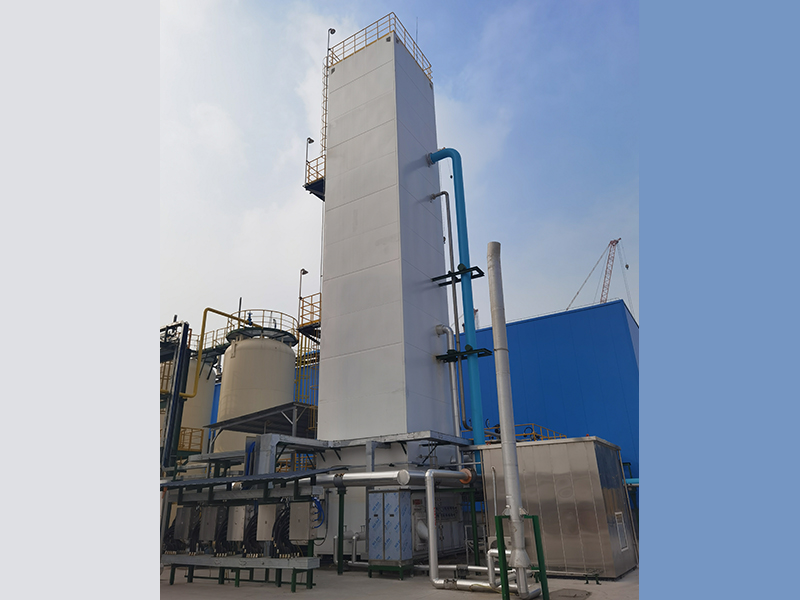
Advanced automation helps air separation plants reduce energy consumption, improve process stability, and respond to changing gas demand. Technologies such as Advanced Process Control (APC) and Model Predictive Control (MPC) can optimize operating parameters without extensive mechanical modifications.
APC and MPC systems use process data to optimize plant performance.
Unlike traditional PID control, MPC can predict process behavior and coordinate multiple operating parameters. This may help reduce unnecessary compressor pressure, stabilize gas purity, and improve overall efficiency.
For industrial applications, Jinhua Gas offers Advanced Cryogenic Air Separation Units with automated process monitoring and control capabilities.
Optimizing compressor pressure and distillation conditions can reduce unnecessary energy consumption.
Advanced control systems may adjust compressor discharge pressure, column reflux, and process flow according to operating demand.
For argon recovery, stable feed conditions and suitable reflux control help maintain product quality and separation efficiency.
Load-following systems adjust plant production according to changing oxygen and nitrogen demand.
Coordinated control of compressors, distillation columns, and refrigeration systems helps maintain stable operation at different production rates.
However, automated load changes must remain within validated process and equipment limits.
Auxiliary equipment may consume less power individually than main compressors, but continuous operation makes it an important part of overall plant efficiency.
Pre-Purification Units (PPUs) remove moisture and carbon dioxide before cryogenic separation.
Regeneration cycles should match adsorbent performance and operating conditions.
Where supported by the system design, monitored or adaptive regeneration can reduce unnecessary heating and purge gas consumption.
However, regeneration must occur before contaminants reach unsafe breakthrough levels.
Factor | Fixed-Time Regeneration | Adaptive Regeneration |
|---|---|---|
Cycle Control | Predetermined schedule | Based on validated operating data |
Energy Use | May include unnecessary heating | Potentially better optimized |
Monitoring | Standard operating controls | Additional sensors and controls |
Main Consideration | Simple and predictable | Requires reliable monitoring and safeguards |
Cooling water pumps should match actual cooling requirements.
Variable Speed Drives (VSDs) may reduce electricity consumption when operating conditions allow lower pump speeds.
Operators should monitor water flow, temperature, and equipment cooling requirements to maintain reliable operation.
Cooling tower fans can use automatic speed control to respond to changing ambient conditions.
Optimized fan operation may reduce electricity consumption during cooler periods while maintaining required cooling water temperatures.
The main cryogenic heat exchanger transfers heat between incoming air and outgoing gas streams.
Monitoring temperature differences and pressure drops helps operators identify inefficient heat transfer.
Maintaining proper flow distribution and equipment cleanliness supports stable thermal performance.
Turboexpanders provide refrigeration required for cryogenic air separation.
Their performance depends on equipment condition, operating pressure, and process flow.
Regular inspection and suitable operating controls help maintain refrigeration efficiency.
Jinhua Gas's High-Performance Cryogenic Air Separation Plant for Steel Manufacturing incorporates cryogenic heat exchange, expansion, and automated monitoring for continuous industrial gas production.
Reducing unnecessary pressure losses can improve overall air separation efficiency.
Important inspection points include:
Inlet air filters.
Purification equipment.
Heat exchangers.
Control valves and piping.
Operators should identify excessive pressure drops and correct them without compromising process safety or separation performance.
Preventive maintenance helps preserve energy efficiency and reduce unexpected downtime.
Monitor filter differential pressure and inspect filtration performance regularly.
Replace filters based on equipment specifications and actual operating conditions rather than visual appearance alone.
Compressor vibration, bearing condition, and lubrication quality influence equipment reliability.
Regular vibration monitoring and oil analysis can help detect mechanical problems before serious failures occur.
Gas leaks increase energy losses and may create safety hazards.
Conduct routine inspections of compressed air systems, instrument air connections, valves, and piping.
Leak testing on cryogenic or oxygen-service equipment must follow approved procedures.
Cold box insulation limits heat leakage into the cryogenic process.
Inspect the cold box casing, insulation condition, and applicable purge or pressure-control systems.
Moisture intrusion or insulation damage should be investigated promptly by qualified personnel.
Equipment | Main Inspection | Expected Benefit |
|---|---|---|
Air Filters | Differential pressure | Reduced airflow resistance |
Compressors | Vibration and lubrication | Improved reliability |
PPU | Adsorbent and regeneration performance | Stable purification |
Heat Exchangers | Temperature and pressure | Better thermal performance |
Cryogenic Cold Box | Insulation integrity | Reduced heat leakage |
Control Systems | Sensors and alarms | Stable operation |
Load shifting can help reduce electricity costs when power tariffs vary throughout the day.
Plants with suitable liquid oxygen or nitrogen storage may adjust production schedules to take advantage of lower electricity prices.
However, storage capacity, minimum operating loads, gas demand, and product supply requirements must be considered.
Some industrial air separation plants may participate in electricity demand-response programs.
These programs reward eligible facilities for reducing or adjusting electricity use during specified periods.
Participation depends on local electricity market rules, plant flexibility, and contractual gas supply obligations.
Renewable electricity procurement can support lower-carbon industrial gas production.
Air separation operators may evaluate renewable power purchase agreements or production planning based on electricity availability.
However, continuous gas supply and safe plant operation must remain the primary requirements.
For industrial buyers, the best solution should balance:
Production capacity and gas purity.
Specific power consumption.
Automated control capabilities.
Load flexibility and operating stability.
Maintenance requirements.
Long-term electricity and operating costs.
Explore Jinhua Gas's Air Separation Plant solutions for customized oxygen, nitrogen, and argon production.
Contact Jinhua Gas to discuss plant capacity, gas purity, automation requirements, and energy-efficiency goals.

Review the following comparison of common optimization strategies. This matrix balances the expected energy reduction against implementation time and required capital.
Optimization Strategy | Implementation Time | Expected Energy Reduction | CAPEX Level |
|---|---|---|---|
Advanced Process Control (MPC) | 3 to 6 Months | 2% to 5% | Low |
Demand-Based PPU Regeneration | 1 to 3 Months | 1% to 2% | Low |
Compressor VSD Installation | 6 to 12 Months | 5% to 10% | High |
Aerodynamic Impeller Retrofit | 9 to 18 Months | 4% to 8% | High |
Cooling Water System VSDs | 2 to 4 Months | 1% to 3% | Medium |
Load Shifting (Liquid Storage) | Immediate (if tanks exist) | Cost Reduction (Not Energy) | None |
Install high-accuracy power meters on all major compressor feeds to establish a precise energy baseline.
Deploy Model Predictive Control software to automate dynamic pressure reduction and tighten argon column reflux ratios.
Upgrade your Pre-Purification Unit to a demand-based regeneration cycle using CO2 and moisture breakthrough analyzers.
Evaluate your Main Air Compressor for aerodynamic impeller retrofits or Variable Speed Drive integration.
Implement a daily differential pressure monitoring routine for inlet air filters to prevent compressor starvation.
A: Targets vary heavily based on product mix and plant size. A modern plant producing gaseous oxygen typically achieves between 0.35 and 0.45 kWh/Nm3. Plants producing high volumes of liquid products will have significantly higher specific power consumption due to the required liquefaction energy.
A: You should conduct a comprehensive energy audit every three to five years. You must monitor key performance indicators like specific power consumption and compressor polytropic efficiency continuously through your distributed control system.
A: Yes, retrofitting VSDs is common. You must conduct a torsional vibration analysis first. Changing the operating speed can excite natural frequencies in the rotor dynamics, potentially causing severe mechanical damage to the compressor train.
A: Warmer ambient air is less dense. The Main Air Compressor must move a larger actual volume of air to deliver the same mass flow of oxygen or nitrogen. Higher cooling water temperatures reduce intercooler efficiency, increasing the compressor's specific work.
A: No. APC software acts as an autopilot, handling minute-by-minute thermodynamic adjustments. This frees your operators to focus on higher-level tasks, plant safety, equipment monitoring, and strategic production planning rather than constantly tweaking PID loops.
A: You measure it by calculating the isentropic efficiency. Compare the actual temperature drop across the turbine against the theoretical maximum temperature drop for the given inlet and outlet pressures. A drop in isentropic efficiency indicates internal wear or seal leakage.


